This article contains affiliate links. If you purchase through these links, we may earn a commission at no extra cost to you.
Squalane has become one of the most quietly essential ingredients in mature skincare — and for good reason. Unlike heavier oils that sit on the surface or synthetic silicones that create the illusion of hydration without delivering it, squalane absorbs rapidly, works at the cellular level, and does something particularly valuable for skin over 40: it replenishes a lipid the body once produced abundantly but now makes in sharply declining quantities. Sebum — the skin’s own natural oil — is approximately 13% squalene, the natural precursor to squalane. By the mid-40s, squalene production has dropped by as much as 50% compared to peak levels, leaving skin drier, more prone to barrier disruption, and less resilient against environmental stress. Squalane, the stabilized and skin-identical form of this lipid, steps in precisely where the skin’s own production has left off. This guide covers the science, the sourcing, the application, and everything women over 40 need to know to use it effectively.
Table of Contents
What Is Squalane — And Why Does It Matter After 40?
Squalane begins as squalene — a naturally occurring lipid found in human sebum, shark liver oil, and several plant sources including olives, sugarcane, amaranth, and rice bran. In its natural form, squalene is highly unstable: it oxidizes rapidly on contact with air, which is why it cannot be used directly in skincare formulations without first being hydrogenated into its stable counterpart, squalane. That single hydrogen addition transforms a reactive, shelf-unstable compound into one of the most elegant and versatile ingredients in modern skincare.
What makes squalane particularly relevant for mature skin is its origin: it is genuinely skin-identical. The human body produces squalene as a component of sebum throughout life, with peak production occurring in the late teens and early twenties. From there, production declines steadily — and the decline accelerates significantly around perimenopause and menopause, when estrogen-driven sebum regulation is disrupted. The result is not just surface dryness but a structural shift in the skin’s lipid barrier: the intercellular cement that holds skin cells together, prevents transepidermal water loss, and acts as the first line of defense against environmental irritants and pathogens becomes increasingly compromised. Squalane replenishes this lipid layer in a way that closely mirrors the skin’s own biochemistry, making it one of the most compatible oils available for mature skin.
The Science: How Squalane Works in Mature Skin
Barrier Repair and Transepidermal Water Loss
The stratum corneum — the outermost layer of the skin — functions as a brick-and-mortar structure. Skin cells are the bricks; the lipid matrix that surrounds them is the mortar. As squalene production declines with age and hormonal change, gaps develop in this matrix, allowing water to evaporate from the skin more rapidly — a process called transepidermal water loss (TEWL). Elevated TEWL is directly associated with the dryness, tightness, and increased reactivity that characterize mature skin. Squalane integrates into the lipid matrix, filling these gaps and measurably reducing TEWL without occluding the skin or preventing normal cellular respiration.
Antioxidant Protection
Squalene in sebum serves a specific biological purpose: it acts as a sacrificial antioxidant on the skin’s surface, absorbing ultraviolet radiation and oxidative damage before it can penetrate to the living layers beneath. As squalene production declines, this protective function weakens — and the skin becomes more susceptible to the oxidative damage that drives the pigmentation changes, collagen fragmentation, and inflammatory cascades that characterize photoaged skin. Topical squalane provides partial restoration of this antioxidant function, intercepting free radicals before they can reach the dermis.
Emolliency Without Comedogenicity
One of the most persistent concerns among women over 40 exploring face oils is comedogenicity — the tendency of certain oils to clog pores and trigger breakouts. Squalane scores a zero on the comedogenic scale, meaning it does not block pores under normal conditions. This is a direct consequence of its skin-identical structure: because the skin recognizes squalane as compatible with its own lipid chemistry, it processes it efficiently without the pore-congesting residue that heavier, less compatible oils can leave behind. This makes squalane appropriate for virtually every skin type, including the combination and acne-prone mature skin that becomes increasingly common as hormonal fluctuations disrupt sebum regulation.
Penetration and Delivery
Squalane’s low molecular weight and lipophilic structure allow it to penetrate the stratum corneum more readily than many other oils. This is not just cosmetically significant — it also makes squalane an effective delivery vehicle for other actives. When applied alongside or mixed with water-soluble serums, squalane helps drive those ingredients into the skin rather than allowing them to sit on the surface. This is why squalane appears as a carrier ingredient in many high-performance serums and why it pairs particularly effectively with vitamin C, retinol, niacinamide, and peptide formulas in a mature skin routine.
Plant-Derived vs. Shark-Derived Squalane: What Women Over 40 Need to Know
For decades, the primary commercial source of squalene was shark liver oil — specifically the livers of deep-sea sharks, which produce squalene in large quantities as a buoyancy mechanism. Shark-derived squalane remains available and is chemically identical in its final form, but the ethical and sustainability concerns are significant: the practice contributes to the decline of deep-sea shark populations, and many regulatory bodies and retailers are moving away from animal-derived squalane entirely.
Plant-derived squalane — most commonly sourced from sugarcane, olives, or amaranth — is now the industry standard for responsible skincare formulation, and it is chemically equivalent to its shark-derived counterpart. The hydrogenation process that converts plant-derived squalene to stable squalane produces a molecule that is indistinguishable in structure and performance from animal sources. For women over 40 building a considered skincare practice, plant-derived squalane is the recommended choice — ethically sound, sustainably sourced, and equally effective.
Sugarcane-derived squalane has become particularly prevalent because sugarcane fermentation produces a high yield of squalene at lower cost than olive-derived sources, making it the most accessible form across all price tiers. Olive-derived squalane — produced as a byproduct of olive oil processing — remains common in European formulations and carries a strong sustainability credential given its origins in an established agricultural industry.
How to Use Squalane for Mature Skin Over 40
As a Standalone Oil
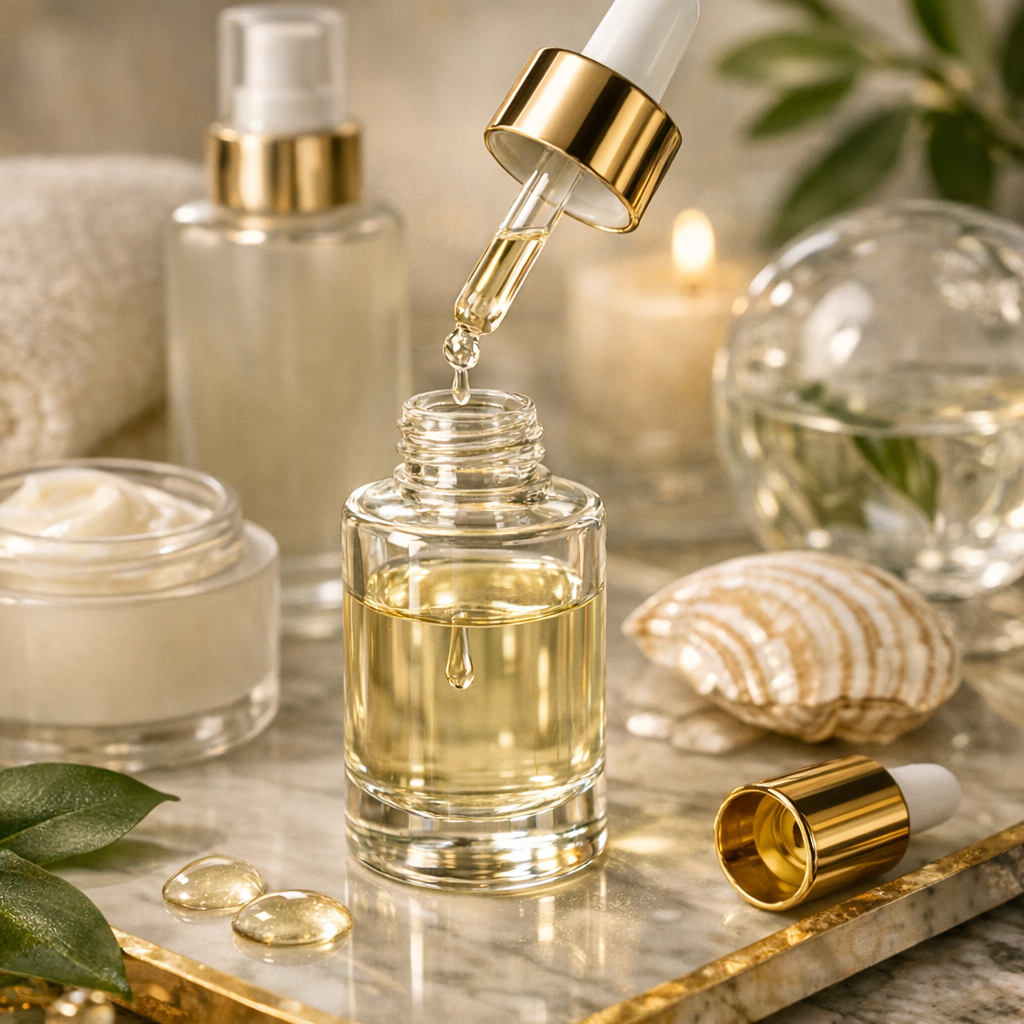
Applied alone, squalane functions as a lightweight facial oil that absorbs completely without greasy residue. For mature skin, the most effective application protocol is onto slightly damp skin — after toner or essence but before moisturizer — where it seals in the water content already present on the skin’s surface while delivering its own lipid replenishment. Two to three drops are sufficient for the full face and neck; more is not more effective and may slow absorption unnecessarily.
As a Booster Mixed Into Serums or Moisturizers
Squalane’s miscibility with both oil-soluble and water-soluble formulas makes it an unusually versatile mixing ingredient. One to two drops can be blended directly into a vitamin C serum, retinol treatment, or moisturizer to enhance the texture, improve spreadability, and buffer the potential irritation of high-concentration actives — particularly retinol, which is known to cause dryness and barrier disruption during the adjustment period. For women over 40 introducing retinol for the first time or escalating concentration, mixing squalane into the retinol formula is one of the most effective strategies for maintaining tolerance. See best retinol serums for mature skin for how this buffering approach applies across the retinol concentration spectrum.
As an Eye Area Treatment
The skin around the eye is the thinnest on the face and among the first to show the barrier compromise that accompanies squalene decline. A single drop of squalane pressed gently around the orbital bone — not tugged, not rubbed — delivers immediate comfort to the tight, papery dryness that develops around the eyes after 40, and supports the efficacy of any dedicated eye cream applied on top. See best eye creams for fine lines and dark circles for how squalane integrates into a comprehensive eye area protocol.
As a Body Treatment
Squalane applied to the body — particularly to the décolleté, arms, and hands, where skin is often most obviously affected by lipid decline — provides rapid comfort to severely dry or crepey skin without the heavy, slow-absorbing texture of traditional body oils. A few drops mixed into body lotion significantly enhances the lotion’s barrier-repair capacity and is particularly effective for the rough, uncomfortable dryness of keratosis pilaris. See best firming body lotion for crepey skin for a complete body care approach.
Layering Order in the Full Routine
Squalane is an oil and therefore follows water-based steps in the routine. The correct layering order for mature skin: cleanser → toner or essence → water-based serum (vitamin C, niacinamide, hyaluronic acid) → squalane → moisturizer → SPF (morning). In the evening routine, squalane applied before moisturizer creates an additional lipid layer that significantly enhances the overnight barrier repair that sleeping skin is already undertaking. For women using retinol, squalane can be applied before the retinol to buffer the skin, or mixed directly into the retinol formula depending on the concentration being used. See the complete anti-aging skincare routine for women 40+ for full layering protocol guidance.
Squalane and Key Ingredient Pairings for Mature Skin
Squalane + Retinol
The most clinically important pairing for women over 40. Retinol is the gold standard for collagen stimulation and cell turnover, but it is also the most common cause of barrier disruption in mature skincare routines — the dryness, peeling, and sensitivity of the adjustment period causes many women to abandon retinol prematurely. Squalane applied before retinol or mixed into the retinol formula creates a lipid buffer that reduces the rate of transepidermal water loss during retinol-induced barrier disruption, significantly improving tolerance without meaningfully reducing retinol’s efficacy. This combination is particularly valuable for women introducing retinol for the first time after 40, or escalating from lower to higher concentrations.
Squalane + Vitamin C
Vitamin C serums — particularly L-ascorbic acid formulations — are formulated at low pH to maintain stability, which can be transiently irritating to the compromised barrier of mature skin. Mixing a drop of squalane into a vitamin C serum or applying it immediately after reduces the sensation of tingling and tightness while enhancing the spreadability and skin contact of the vitamin C formula. The antioxidant actions of squalane and vitamin C are also genuinely complementary: vitamin C works in the aqueous environment of the skin, while squalane’s antioxidant function operates in the lipid layer — together they provide broader oxidative protection than either delivers alone. See best vitamin C serums for mature skin for the full vitamin C category.
Squalane + Hyaluronic Acid
Hyaluronic acid is a humectant — it draws water into the skin from the environment and the deeper skin layers. Without an occlusive or emollient step to seal that hydration in place, HA can actually draw moisture out of the skin in low-humidity environments, leaving skin drier than before application. Squalane applied over a hyaluronic acid serum acts as the emollient seal that prevents this moisture loss, locking the HA’s hydration into the skin rather than allowing it to evaporate. This combination is one of the most effective hydration protocols available for the dry, dehydrated mature skin that accompanies post-menopausal sebum reduction. See best hyaluronic acid serums for mature skin for the full HA context.
Squalane + Peptides
Peptides — the amino acid chains that signal collagen and elastin production — are water-soluble actives that benefit from the enhanced skin penetration that a lipid carrier provides. Squalane applied as the step preceding or mixed into a peptide serum improves the delivery of peptide actives into the dermis, where they do their structural work. This is not a theoretical benefit: the skin’s lipid matrix is the primary barrier to peptide penetration, and squalane’s ability to integrate into that matrix without disrupting it makes it a genuinely effective co-delivery vehicle. See peptides for skin firming for a comprehensive look at peptide science in mature skin.
Squalane in the Market: What to Look for Across Every Tier
Not all squalane formulations are equal. The primary variables that affect quality and performance are source (plant-derived preferred), purity (100% squalane with no diluting carrier oils delivers the clearest results for skin assessment), and the vehicle — whether it is used as a standalone oil or formulated into a serum, moisturizer, or hybrid product. Women over 40 evaluating squalane options should look for clear sourcing disclosure on the label, plant-derived certification where available, and a packaging format that protects the squalane from oxidation — dark glass or opaque airless pumps are preferable to clear bottles that expose the oil to light degradation over time.
At the Essentials tier, 100% pure squalane in a simple, single-ingredient format delivers the most straightforward barrier replenishment with maximum formulation transparency. At the Elevated tier, squalane appears in hybrid serums and moisturizers that combine it with complementary actives — hyaluronic acid, peptides, ceramides — for a more comprehensive treatment in a single step. At the Luxe tier, squalane functions primarily as a carrier and emollient within complex multi-active formulas, where it enhances texture, delivery, and skin compatibility rather than serving as the primary active.
The VVL Standard on Squalane
The Vault evaluates squalane products and formulations on three criteria: source transparency and sustainability, purity of delivery relative to the formulation’s stated purpose, and the specificity of the formula to the concerns of mature skin over 40. For an ingredient as clean and well-understood as squalane, formulation integrity is the primary differentiator — the absence of unnecessary additives, sensitizing preservatives, or diluting oils that compromise the clarity of the squalane’s performance. In this edit, ingredient education leads; products serve the science.
Frequently Asked Questions
What is squalane and why is it good for mature skin?
Squalane is a stabilized, skin-identical lipid derived from squalene — a compound naturally present in human sebum. It is particularly relevant for mature skin because squalene production declines by up to 50% between the peak years and the mid-40s, directly contributing to the dryness, barrier thinning, and increased reactivity that characterize skin after menopause. Topical squalane replenishes this lipid in a form the skin recognizes and processes efficiently, restoring barrier integrity, reducing transepidermal water loss, and delivering antioxidant protection to the surface of the skin.
Is squalane the same as squalene?
No — though they are closely related. Squalene is the natural, unstable form found in sebum and plant sources. It oxidizes rapidly when exposed to air, making it unsuitable for use in skincare formulations. Squalane is squalene that has been hydrogenated — a single chemical step that adds hydrogen molecules to stabilize the compound, extending its shelf life significantly and making it safe and effective for topical application. In terms of skin performance, stabilized squalane delivers the same biological benefits as natural squalene.
Is plant-derived squalane as effective as shark-derived squalane?
Yes — chemically and functionally identical. The hydrogenation process that converts squalene to squalane produces the same molecule regardless of the source. Plant-derived squalane — most commonly from sugarcane, olives, or amaranth — is the recommended choice for both ethical and sustainability reasons, and it performs identically to animal-derived squalane in clinical and consumer use. The vast majority of reputable skincare brands now use exclusively plant-derived squalane.
Can squalane clog pores?
No — squalane has a comedogenic rating of zero, meaning it does not block pores under normal conditions. This is one of its most significant advantages for mature skin, which can experience both dryness and breakouts simultaneously due to hormonal fluctuations. Squalane’s skin-identical chemistry means it integrates into the lipid matrix without the pore-congesting residue associated with heavier, less compatible oils such as coconut oil or certain plant butters.
How does squalane differ from other face oils?
The key distinction is skin-identicalness. Most plant-based face oils — rosehip, argan, marula, jojoba — are rich in fatty acids that are beneficial but structurally foreign to the skin’s own lipid chemistry. They require processing by the skin before integration, which can slow absorption and, in higher concentrations, contribute to congestion. Squalane’s structure mirrors the lipids already present in human sebum, allowing it to integrate immediately and efficiently without triggering the skin’s foreign-substance response. It is also significantly lighter than most plant oils, absorbing without residue on virtually every skin type.
When should I apply squalane in my skincare routine?
Squalane is an oil and follows all water-based steps. The correct morning sequence is: cleanser → toner → water-based serum → squalane → moisturizer → SPF. In the evening: cleanser → toner → treatment serum (retinol, vitamin C, peptides) → squalane → moisturizer. For women using retinol, squalane can be applied before the retinol as a buffer, or mixed directly into the retinol to reduce barrier disruption during the adjustment period. See the complete anti-aging skincare routine for women 40+ for full layering guidance.
Can I use squalane around my eyes?
Yes — squalane is one of the gentlest and most compatible options for the orbital zone. The skin around the eye is the thinnest on the face and among the most susceptible to the barrier compromise that accompanies squalene decline after 40. A single drop pressed gently around the eye without tugging delivers immediate barrier replenishment and complements any dedicated eye cream applied on top. Squalane does not migrate into the eye itself and is non-irritating for virtually all skin types.
Can squalane replace my moisturizer?
For most women over 40, no — squalane is an emollient that replenishes the lipid component of the skin barrier, but a complete moisturizer also provides humectants (hyaluronic acid, glycerin) that draw water into the skin and occlusives that seal it in. Squalane used alone addresses barrier lipid depletion but does not deliver the layered hydration that mature skin requires. It functions most effectively as a dedicated step between serum and moisturizer, or mixed into a moisturizer to enhance its barrier-repair capacity. Women with very oily skin at any age may find squalane alone sufficient as a finishing step in warm climates.
Is squalane safe during pregnancy?
Yes — squalane is considered safe for use during pregnancy. It is a skin-identical lipid with no known systemic effects, no hormone-disrupting properties, and no ingredients of concern for expectant mothers. It is one of the few skincare actives that carries no pregnancy caution, making it a particularly useful ingredient for women who need to simplify their routines during pregnancy or nursing by replacing retinol, vitamin C, and exfoliant steps with a gentle, effective alternative.
How much squalane should I use?
Two to three drops is sufficient for the full face and neck in a standalone application. More does not improve efficacy and may slow absorption unnecessarily. When mixing squalane into another product, one to two drops into the palm alongside the serum or moisturizer is the correct quantity. Over-application of squalane — particularly on already-oily skin — can create a surface sheen without additional benefit, so the principle of less-is-more applies here as with most concentrated skincare ingredients.
Does squalane help with redness and rosacea?
Squalane is genuinely soothing for reactive and rosacea-prone skin because of its anti-inflammatory properties and its ability to restore the compromised barrier that allows environmental triggers to penetrate and activate the inflammatory cascade. It does not directly address the vascular component of rosacea — for that, ingredients like azelaic acid and niacinamide are more specifically targeted — but it significantly reduces the baseline reactivity of skin that is vulnerable due to barrier dysfunction. For women over 40 with rosacea-prone skin that has become more reactive after menopause, squalane is one of the safest and most supportive additions to a redness-management routine.
Can squalane be used on the body as well as the face?
Yes — and for women over 40, body application is an underutilized benefit. The décolleté, arms, hands, and legs are all susceptible to the same lipid-barrier decline that affects the face, often manifesting as crepey texture, rough patches, and the discomfort of keratosis pilaris. A few drops of squalane mixed into a body lotion significantly enhances the lotion’s barrier-repair effect, while a few drops applied neat to particularly dry areas delivers rapid comfort without the slow-absorbing heaviness of traditional body oils. See best firming body lotion for crepey skin for how squalane fits into a complete body care routine.
What is the difference between squalane serum and squalane oil?
The distinction is primarily formulation vehicle rather than active ingredient. A pure squalane oil is 100% squalane — maximum concentration, maximum flexibility, most appropriate for women who want to control exactly how much of the ingredient they are using and how they layer it. A squalane serum combines squalane with other actives — typically hyaluronic acid, peptides, or antioxidants — in a water-based or hybrid formula that delivers a more comprehensive treatment in a single step. Neither is inherently superior; the right choice depends on whether the user wants squalane as a dedicated step or prefers the convenience of a multi-active formula. For women building a layered routine with multiple actives already in play, pure squalane oil offers the cleanest integration.
Squalane at a Glance: What Mature Skin Needs to Know
| Squalane Property | Why It Matters for Skin Over 40 |
|---|---|
| Skin-identical lipid | Integrates into the barrier without triggering foreign-substance response |
| Zero comedogenic rating | Safe for all skin types including combination and breakout-prone mature skin |
| Reduces TEWL | Seals the lipid gaps that develop as squalene production declines after 40 |
| Antioxidant function | Partially restores the surface free radical defense lost with sebum decline |
| Retinol buffer | Reduces barrier disruption during retinol adjustment — critical for mature skin |
| HA pairing | Seals humectant hydration in place — prevents HA from drawing moisture out |
| Plant-derived options | Ethically and sustainably sourced with no performance compromise |
| Safe during pregnancy | No hormone-disrupting or otherwise concerning ingredients |
Previously in The Vault: Best Paula’s Choice Products for Women Over 40
Coming next: Best Primers for Mature Skin — The Vault curates the most skin-forward primers for women over 40, from blurring silicone-free formulas to hydrating bases that work with mature skin’s texture rather than against it.
Comments are closed