This article contains affiliate links. If you purchase through these links, we may earn a commission at no extra cost to you.
Every active ingredient in a mature skincare routine — retinol, vitamin C, AHAs, peptides — is working to build and protect collagen. Every morning that passes without broad-spectrum SPF, UV radiation systematically dismantles that work. Up to 90% of visible skin aging is attributable to cumulative sun exposure. That means the wrinkles, dark spots, loss of firmness, and uneven texture that the rest of the routine is addressing were largely caused by something that takes 60 seconds each morning to prevent.
Sunscreen for mature skin is not simply about sun protection. After 40, the skin is thinner, drier, and more prone to showing every texture flaw. The formulas that worked in earlier decades — heavy, greasy, designed for outdoor sport — settle into fine lines and emphasize every surface irregularity. The best sunscreen for mature skin is one that women will actually wear daily: elegant enough to layer under makeup or use alone, hydrating enough to support the barrier that mature skin struggles to maintain, and broad-spectrum enough to genuinely protect the collagen that retinol and peptides are rebuilding overnight.
The Vault has curated ten of the most credible SPF formulas across every tier — from the Luxe mineral formula that combines TFC8® cellular renewal with broad-spectrum protection, through clinical Elevated picks with advanced DNA-repair technology, to the Essentials formulas that deliver dermatologist-grade daily protection at the most accessible investment.
Table of Contents
The VVL Sunscreen Edit
| Product | Tier | SPF | Type | Best For | Store |
|---|---|---|---|---|---|
| Augustinus Bader The Mineral Sunscreen SPF 50 ⭐ VVL-Chosen | Luxe | 50 | Mineral | Complete cellular protection | Explore |
| ISDIN Eryfotona Ageless Tinted SPF 50 | Luxe | 50 | Mineral | DNA repair + anti-aging SPF | Explore |
| EltaMD UV Clear Broad-Spectrum SPF 46 | Elevated | 46 | Hybrid | Sensitive + rosacea-prone skin | Amazon |
| EltaMD UV Restore Tinted SPF 40 | Elevated | 40 | Mineral | Barrier support + daily wear | Explore |
| Revision Intellishade TruPhysical SPF 45 | Elevated | 45 | Mineral | Tinted clinical SPF + anti-aging | Explore |
| La Roche-Posay Anthelios Melt-in Milk SPF 60 | Essentials | 60 | Chemical | Maximum protection daily wear | Amazon |
| CeraVe Hydrating Sheer Sunscreen SPF 30 | Essentials | 30 | Chemical | Dry + sensitive skin daily | Amazon |
| Neutrogena Hydro Boost Water Gel Lotion SPF 50 | Essentials | 50 | Chemical | Dehydrated + combination skin | Amazon |
| Australian Gold Botanical Tinted SPF 50 | Essentials | 50 | Mineral | Tinted mineral at Essentials | Amazon |
| Olay Super Cream with Sunscreen SPF 30 | Essentials | 30 | Chemical | Multi-active SPF moisturizer | Amazon |
The Science: Why Sunscreen Is the Most Important Anti-Aging Product You Own
The mechanism by which UV exposure drives skin aging is direct and well-documented. UVA rays — which penetrate through cloud cover and glass, 365 days a year — reach the dermis and directly activate matrix metalloproteinases (MMPs), the enzymes that degrade collagen and elastin. Every MMP activation event from UV exposure partially offsets the collagen synthesis that retinol, peptides, and vitamin C are driving in the routine. Without daily broad-spectrum SPF, the anti-aging routine is working against a tide of daily collagen destruction.
UVB rays cause the surface damage that becomes visible as hyperpigmentation, age spots, and uneven tone — the concerns that vitamin C and dark spot correctors address. But UVB also triggers DNA damage in melanocytes and keratinocytes that accumulates over decades and becomes increasingly visible after 40 as the accumulated mutations manifest on the surface.
The good news: published research has demonstrated that consistent daily broad-spectrum SPF use not only stops this accumulation but produces measurable reversal of existing photodamage over time — improved skin tone, smoother texture, and reduced hyperpigmentation — through the 28-day cell turnover cycle that steadily replaces UV-damaged surface cells with healthier ones from below.
For mature skin specifically, two additional considerations apply. First, retinol and AHAs — the actives most likely to be in a mature skin routine — increase photosensitivity. The skin undergoing accelerated cellular renewal is more vulnerable to UV damage than non-active skin, making SPF more critical, not optional, when using these ingredients. Second, the thinner, more fragile dermis of skin over 40 repairs UV-induced collagen damage more slowly than younger skin — making prevention far more efficient than correction.
For the full routine context, see The Vault’s complete anti-aging skincare routine for women 40+.
What to Look For in a Sunscreen for Mature Skin
Broad-spectrum protection is the only non-negotiable. A sunscreen that protects against UVB only is not adequate for anti-aging purposes. UVA — the aging ray — requires specific filter coverage. Broad-spectrum labeling in the US guarantees a minimum level of UVA protection alongside UVB. SPF 30 is the clinically supported minimum for daily use; SPF 50 is the recommendation for women using retinol, AHAs, or spending meaningful time outdoors.
Mineral vs. chemical filters: the practical distinction for mature skin. Mineral filters (zinc oxide, titanium dioxide) sit on top of the skin and physically scatter UV radiation. They are inherently gentle, appropriate for sensitive and reactive skin, and provide broad-spectrum coverage from the moment of application. Chemical filters absorb UV radiation and convert it to heat, requiring 20–30 minutes post-application to reach full efficacy. Chemical formulas are typically more cosmetically elegant — thinner, less prone to white cast — making them more practical as a daily wear formula under makeup. Both deliver effective protection when properly applied.
Hydrating and barrier-supporting ingredients elevate a sunscreen to a skincare step. After 40, the morning sunscreen application is the last skincare step — applied over serums and moisturizer, it seals and protects the entire treatment layer. Sunscreens that include ceramides, hyaluronic acid, squalane, or niacinamide add a meaningful benefit to this final step rather than simply providing UV protection in isolation. For the HA and barrier context, see The Vault’s best hyaluronic acid serums for mature skin.
Application amount is where most people fail. SPF ratings are measured at 2mg per cm² — approximately a quarter teaspoon for the face alone. Most people apply 25–50% of this amount, dramatically reducing the effective SPF. The practical solution: apply a generous, even layer covering the entire face, neck, and décolleté, and reapply every 2 hours in direct sun exposure. For sunscreen for mature skin, the protection is only as good as the application.
⭐⭐⭐ Luxe Tier
Augustinus Bader The Mineral Sunscreen SPF 50 ⭐ VVL-Chosen
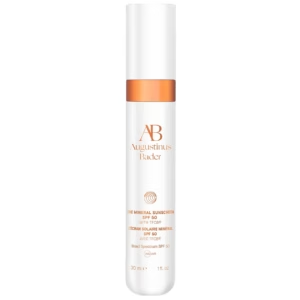
Augustinus Bader The Mineral Sunscreen SPF 50 earns VVL-Chosen by being the only sunscreen in this edit — or the category — that incorporates TFC8® (Trigger Factor Complex) technology into an SPF formula. Every other sunscreen in this edit provides UV protection and may include beneficial skincare ingredients. The AB formula provides UV protection while simultaneously initiating TFC8®’s cellular renewal signaling in the final morning step — meaning the sunscreen is not simply sealing the routine but actively extending it.
The formula is 100% mineral (zinc oxide + titanium dioxide), delivering broad-spectrum SPF 50 that is appropriate from the moment of application and completely appropriate for the most sensitive mature skin. TFC8® guides amino acids, vitamins, and peptides to the cellular renewal sites in the skin’s upper layers during the SPF’s contact time — supporting the collagen synthesis and skin repair that the rest of the morning routine is designed to initiate. The finish is a luminous, lightweight mineral texture that layers cleanly under makeup or wears beautifully alone.
Board-certified dermatologist Dr. Dendy Engelman has noted that mineral sunscreens with active skin-beneficial ingredients represent the most intelligent approach to the final morning step — providing UV protection while delivering additional cellular benefit during continuous contact with the skin throughout the day. Verified buyers consistently report a distinctly superior skin quality after adopting the AB Mineral Sunscreen: more even tone, more luminous finish, and a skin-ready appearance that no other SPF in their experience has produced.
Explore Augustinus Bader The Mineral Sunscreen SPF 50 →
Pros: TFC8® cellular renewal technology incorporated into the daily SPF step · 100% mineral formula appropriate for all mature skin types including sensitive · Broad-spectrum SPF 50 from moment of application · Luminous finish that layers cleanly under makeup · Explore stocked · Verified buyer recognition for post-SPF skin quality distinctly superior to standard mineral formulas
Cons: Luxe tier investment — the highest in this edit · Mineral formulas require careful blending to avoid white cast — apply in thin layers · The TFC8® benefit, while real, is delivered during contact time only
ISDIN Eryfotona Ageless Tinted Mineral Sunscreen SPF 50
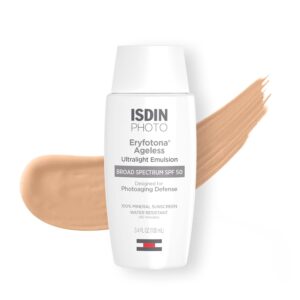
ISDIN Eryfotona Ageless is the most clinically sophisticated sunscreen in this edit for the specific challenge of reversing accumulated photodamage. The formula contains DNA Repairsomes — photolyase enzyme-encapsulated DNA repair technology that has published clinical data demonstrating its ability to correct existing UV-induced DNA damage in skin cells, not simply prevent new damage. This mechanism is categorically different from all other sunscreens in this edit: every other formula prevents UV damage from occurring; Eryfotona Ageless both prevents new damage and actively repairs accumulated mutations.
The tinted formula uses 100% mineral filters with a universal tint that suits most skin tones without white cast. For women over 40 managing decades of accumulated UV damage — hyperpigmentation, uneven tone, chronic sun spots — Eryfotona Ageless addresses the problem at the DNA level while protecting against its continuation. For the dark spot context, see The Vault’s best dark spot correctors for mature skin.
Explore ISDIN Eryfotona Ageless →
Pros: DNA Repairsomes technology actively repairs existing UV-induced DNA damage — the only mechanism in this edit that works retroactively · 100% mineral broad-spectrum SPF 50 · Universal tinted finish reduces white cast and provides slight coverage · Explore stocked · Published clinical data for DNA repair mechanism · Ultralight texture appropriate for oily and combination mature skin
Cons: Luxe tier investment · Tinted formula may not suit all skin tones despite the universal tint claim · The DNA repair benefit requires consistent daily use over weeks to assess cumulatively
⭐⭐ Elevated Tier
EltaMD UV Clear Broad-Spectrum SPF 46
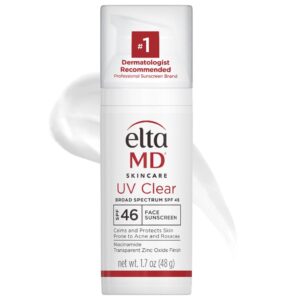
EltaMD UV Clear is the most consistently dermatologist-recommended sunscreen in the Elevated tier — a hybrid zinc oxide (9%) and chemical filter formula that combines the gentleness of mineral protection with the cosmetic elegance of chemical formulas. The niacinamide inclusion (5%) makes it specifically appropriate for mature skin managing redness, rosacea, or sensitivity — the anti-inflammatory and barrier-supporting properties of niacinamide at 5% provide meaningful additional benefit beyond sun protection. The hyaluronic acid ensures post-application comfort for drier mature skin. For the niacinamide context, see The Vault’s best niacinamide serums for mature skin.
Explore EltaMD UV Clear SPF 46 at Amazon →
Pros: #1 dermatologist-recommended sunscreen at Elevated investment · 9% zinc oxide provides mineral protection with chemical formula elegance · 5% niacinamide delivers meaningful anti-inflammatory and barrier support · Hyaluronic acid provides post-application comfort · Fragrance-free · Appropriate for sensitive, rosacea-prone, and post-procedure skin · Available tinted and untinted
Cons: Amazon routing — verify seller · Hybrid formula means some mineral filter presence — minimal white cast but not completely invisible · SPF 46 rather than 50 — appropriate for daily use, step up for extended outdoor exposure
EltaMD UV Restore Tinted Broad-Spectrum SPF 46
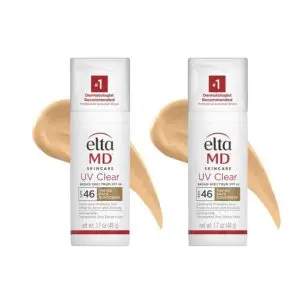
EltaMD UV Restore is specifically formulated for skin that needs SPF protection alongside barrier support and moisture restoration — making it the most appropriate EltaMD formula for women managing the barrier compromise that accompanies mature, dry, or hormonally changing skin. The formula combines 100% mineral broad-spectrum protection with squalane (barrier-supporting and emollient), vitamin C (antioxidant and brightening), and antioxidants in a tinted format that provides slight coverage alongside protection. For women who want their daily SPF to also address the dryness and barrier fragility of mature skin in one step, UV Restore is the most targeted Elevated option. For the menopause skin context, see The Vault’s best menopause skincare products.
Explore EltaMD UV Restore Tinted SPF 40 →
Pros: Squalane + vitamin C + antioxidants add skincare benefit beyond UV protection · 100% mineral formula — appropriate from moment of application · Tinted finish provides slight coverage and reduces white cast · Specifically designed for dry and sensitive skin needing barrier support · Explore stocked
Cons: SPF 40 — appropriate for daily use, step up for extended outdoor activities · Tinted formula suits light-to-medium skin tones primarily · Squalane content may feel too rich for oily or combination skin
Revision Skincare Intellishade TruPhysical SPF 45
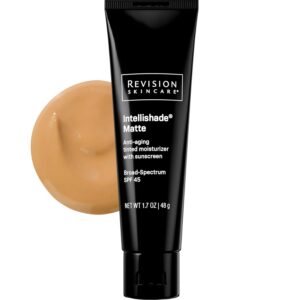
Revision Skincare Intellishade TruPhysical is the Elevated tier’s most comprehensive tinted mineral SPF — combining 100% mineral broad-spectrum SPF 45 with a multi-peptide anti-aging complex, niacinamide, and a buildable tinted coverage formula that suits a wider range of skin tones than most mineral tinted SPFs. The Intellishade formula is specifically positioned as an SPF moisturizer with anti-aging benefits — peptides for collagen signaling, niacinamide for brightening and barrier support, and broad-spectrum mineral protection in a single step. For women who want their daily SPF to replace or significantly supplement their morning moisturizer, Intellishade TruPhysical is the most clinically formulated tinted option at the Elevated tier.
Explore Revision Intellishade TruPhysical SPF 45 →
Pros: Multi-peptide complex adds collagen-signaling activity to daily SPF · Niacinamide for brightening and barrier support · 100% mineral broad-spectrum SPF 45 · Buildable tinted coverage in multiple shades — broader skin tone suitability than most tinted mineral SPFs · Explore stocked · Physician-channel brand with clinical track record
Cons: Elevated investment · Tinted SPF moisturizer may not fully replace a dedicated moisturizer for very dry mature skin · The coverage, while buildable, is lighter than a foundation or full BB cream
⭐ Essentials Tier
La Roche-Posay Anthelios Melt-in Milk Sunscreen SPF 60
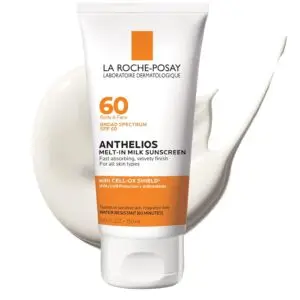
La Roche-Posay Anthelios Melt-in Milk is the Essentials tier’s maximum protection option — SPF 60 in a silky, lightweight chemical formula that earns its “melt-in” name through one of the most elegant textures available at the Essentials investment level. The Cell-Ox Shield antioxidant technology provides additional free radical defense alongside the UV filters, and the water-resistant formula provides 80-minute protection during outdoor activity. For women who spend meaningful time outdoors, practice sport, or simply want maximum UV protection with minimum formula weight, Anthelios SPF 60 is The Vault’s Essentials recommendation. For more on SPF in the daily routine, see The Vault’s complete anti-aging skincare routine.
Explore La Roche-Posay Anthelios Melt-in Milk SPF 60 at Amazon →
Pros: SPF 60 — highest protection level in this edit at Essentials investment · Silky texture melts without heaviness or residue · Water-resistant for 80 minutes · Cell-Ox Shield antioxidant complex · Fragrance-free · Strong verified buyer record for outdoor and active use · Amazon routing
Cons: Chemical filter formula — requires 20–30 minutes before full efficacy · Not appropriate for those who prefer 100% mineral formulas · Amazon routing — verify seller
CeraVe Hydrating Sheer Sunscreen SPF 30
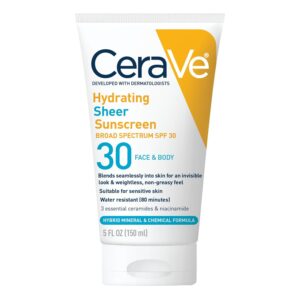
CeraVe Hydrating Sheer Sunscreen is the Essentials tier’s most barrier-supportive daily SPF — combining three essential ceramides, hyaluronic acid, and niacinamide with lightweight chemical filters in the brand’s MVE time-release system. For women whose daily SPF application is also the step where barrier support and hydration need to be delivered, the CeraVe formula provides meaningful ceramide and HA benefit in the SPF step itself. It is also the appropriate choice for women whose skin is too dry or sensitive for the Neutrogena Hydro Boost gel format but who want a lighter daily SPF than a separate moisturizer step would require. For the ceramide context, see The Vault’s ceramides explainer.
Explore CeraVe Hydrating Sheer Sunscreen SPF 30 at Amazon →
Pros: Three essential ceramides + hyaluronic acid deliver barrier support in the SPF step · MVE technology provides sustained moisture release · Fragrance-free, non-comedogenic, dermatologist-developed · Lightweight sheer finish that layers under makeup · Strong Essentials value for the formulation breadth · Amazon routing
Cons: SPF 30 — the minimum clinical recommendation; step up to SPF 50 for extended outdoor exposure or retinol users · Chemical filter formula requires 20–30 minute pre-exposure application window · Not appropriate as a standalone for women with very dry skin who need a richer moisturizer step
Neutrogena Hydro Boost Water Gel Lotion SPF 50
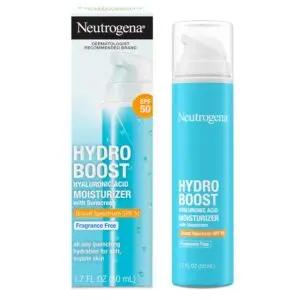
Neutrogena Hydro Boost Water Gel Lotion SPF 50 brings the brand’s hyaluronic acid hydration platform to a lightweight SPF 50 formula — a water-gel texture that provides high-protection chemical SPF with HA-boosted hydration in the most lightweight format at the Essentials tier. For mature skin that retains some combination tendencies — women who were oilier in earlier decades and are managing the transition to drier skin — the water-gel format provides SPF 50 protection without the heaviness that dry-skin-optimized formulas carry. For more on hyaluronic acid, see The Vault’s best hyaluronic acid serums for mature skin.
Explore Neutrogena Hydro Boost SPF 50 at Amazon →
Pros: SPF 50 at Essentials investment in a lightweight water-gel format · HA inclusion maintains hydration throughout the day · Fast-absorbing — under 30 seconds · Appropriate for combination and normal mature skin · Strong verified buyer record
Cons: Contains fragrance — may not suit very sensitive skin · Chemical filter formula requires pre-exposure application window · Water-gel texture may feel insufficiently moisturizing for dry mature skin
Australian Gold Botanical Tinted Face SPF 50
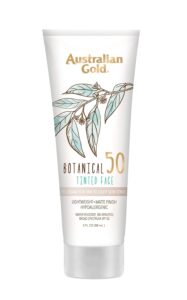
Australian Gold Botanical Tinted Face SPF 50 is the Essentials tier’s 100% mineral tinted option — zinc oxide and titanium dioxide with Kakadu plum (one of the highest natural vitamin C sources) in a matte-finish tinted formula that provides light coverage alongside SPF 50 protection. For women who want a mineral formula with tinted coverage at the Essentials investment level, the Australian Gold formula provides a genuinely Essentials-accessible alternative to the Elevated tinted mineral options. The matte finish suits combination and oily mature skin that finds the richer tinted Elevated formulas too heavy.
Explore Australian Gold Botanical Tinted SPF 50 at Amazon →
Pros: 100% mineral formula — appropriate from moment of application, reef-safe · SPF 50 tinted at Essentials investment — most accessible tinted mineral in this edit · Kakadu plum provides high-antioxidant vitamin C support · Matte finish suits combination and oily mature skin · 38,000+ verified reviews · Amazon routing
Cons: Limited shade range — may not suit all skin tones · Can be drying for very dry mature skin — best for normal to combination · Not fragrance-free
Olay Super Cream with Sunscreen SPF 30
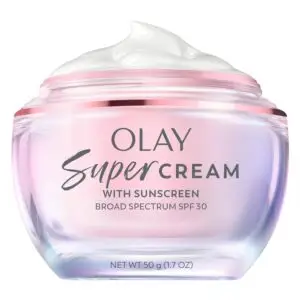
Olay Super Cream SPF 30 is the Essentials tier’s most multi-active formula — combining SPF 30 with vitamin C, niacinamide, a collagen peptide, and hyaluronic acid in a formula that replaces both moisturizer and sunscreen in a single morning step. For women seeking maximum morning routine simplification without sacrificing anti-aging active coverage, the Olay Super Cream is the most complete multi-function Essentials option in this edit. The vitamin C + niacinamide + collagen peptide combination addresses brightening, barrier support, and collagen signaling alongside the SPF protection.
Explore Olay Super Cream SPF 30 at Amazon →
Pros: Vitamin C + niacinamide + collagen peptide + HA in one SPF step — broadest anti-aging active coverage at Essentials investment · Replaces morning moisturizer for simplified routine · Fragrance-containing but widely tolerated · Strong verified buyer record for multi-benefit delivery · Accessible Essentials investment
Cons: SPF 30 — minimum clinical recommendation; step up for extended outdoor use · Contains fragrance · Collagen peptide concentration at Essentials level — lower than dedicated peptide serums · Amazon routing
⭐ VVL-Chosen: Why Augustinus Bader The Mineral Sunscreen Earns the Designation
The Vault designates Augustinus Bader The Mineral Sunscreen SPF 50 as VVL-Chosen because it is the only sunscreen that transforms the daily SPF step from protective to generative. Every other formula in this edit provides UV protection of varying sophistication. The AB formula provides UV protection while TFC8® simultaneously initiates cellular renewal signaling — making the sunscreen step an active contribution to the skin’s regenerative cycle rather than simply the last line of defense against damage. For women who have built a complete clinical routine and want every step to be working toward the same cellular renewal goal, The Mineral Sunscreen is the answer.
ISDIN Eryfotona Ageless is the definitive Luxe alternative for women whose primary concern is reversing accumulated photodamage — its DNA Repairsomes technology is the only active mechanism in the sunscreen category that addresses decades of UV-induced DNA mutations rather than simply preventing new ones. EltaMD UV Clear is The Vault’s Elevated benchmark for sensitive and rosacea-prone mature skin. La Roche-Posay Anthelios SPF 60 is The Vault’s Essentials benchmark for maximum daily protection.
🥊 Head-to-Head Comparisons
Augustinus Bader Mineral SPF 50 vs. ISDIN Eryfotona Ageless
Both are Luxe-tier mineral SPF 50 formulas with active mechanisms beyond standard UV protection. AB wins on cellular renewal — TFC8® initiates the skin’s own regenerative pathways during the SPF’s daily contact time. ISDIN wins on photodamage reversal — DNA Repairsomes actively corrects existing UV-induced DNA mutations, a mechanism AB does not provide. For cellular renewal and the most complete daily protective routine, AB. For women managing significant accumulated photodamage and uneven tone, ISDIN.
EltaMD UV Clear vs. EltaMD UV Restore
Both are Elevated EltaMD formulas for mature skin. UV Clear wins for sensitive, rosacea-prone, or reactive skin — the niacinamide formula is the most clinically validated EltaMD option for inflammatory skin conditions. UV Restore wins for dry and barrier-compromised skin — the squalane and antioxidant complex specifically addresses the moisture restoration needs of skin managing barrier compromise. Skin type decides: reactive and sensitive, UV Clear; dry and barrier-compromised, UV Restore.
EltaMD UV Restore vs. Revision Intellishade TruPhysical
Both are tinted mineral Elevated formulas. EltaMD UV Restore prioritizes barrier support and moisture restoration — squalane + vitamin C + antioxidants in a lighter tinted formula. Revision Intellishade TruPhysical prioritizes anti-aging coverage — multi-peptide complex + niacinamide + buildable tinted coverage. For barrier-first daily SPF wear, EltaMD Restore. For anti-aging coverage that approaches a moisturizer-replacement, Revision.
La Roche-Posay SPF 60 vs. CeraVe Sheer SPF 30
LRP wins on protection level — SPF 60 is the highest in the Essentials tier. CeraVe wins on barrier support — three ceramides plus HA provide the most barrier-active Essentials SPF formula. For maximum outdoor protection, LRP. For daily indoor use with barrier support priority, CeraVe. Women using retinol should consider stepping up from SPF 30 to SPF 50 or above.
CeraVe Hydrating SPF 30 vs. Neutrogena Hydro Boost SPF 50
Both are lightweight Essentials chemical SPFs with HA inclusion. CeraVe wins for dry skin — ceramide barrier support and non-comedogenic formula. Neutrogena wins for combination skin — SPF 50 in a water-gel format that provides higher protection without heaviness. Skin type and desired protection level decide.
Australian Gold Tinted vs. Olay Super Cream SPF 30
Australian Gold provides 100% mineral SPF 50 with light tinted coverage — the cleanest mineral Essentials formula. Olay provides chemical SPF 30 with multi-active anti-aging ingredients (vitamin C, niacinamide, peptides, HA). For mineral protection with slight coverage, Australian Gold. For multi-active anti-aging in a simplified SPF moisturizer, Olay.
How to Apply Sunscreen for Maximum Protection on Mature Skin
Apply last in the morning routine. Sunscreen is always the final step — applied over all serums, moisturizers, and eye creams. Nothing goes on top of SPF except makeup. The sunscreen film must sit directly on the skin surface to function; applying additional skincare products on top disrupts the film and reduces efficacy.
Use the right amount. SPF efficacy is tested at 2mg/cm² — approximately a quarter teaspoon (1.25ml) for the face alone. Applying half this amount reduces SPF 50 protection to approximately SPF 12. For most women, this means a generous pea-to-nickel sized amount — noticeably more than most use.
Cover the full treatment area. Face, neck, and décolleté — the three areas most consistently neglected between SPF applications. Every area that receives any sun exposure needs SPF coverage. For SPF on the body, see The Vault’s guide to best firming body lotion for crepey skin for body sun protection context.
Reapply every 2 hours in direct sun. Sunscreen degrades under UV exposure. The 2-hour reapplication window applies whenever spending time outdoors in direct sun — not necessary for indoor work at a window, but essential for any outdoor activity.
Chemical sunscreens need 20–30 minutes before full efficacy. Apply chemical filter formulas at least 20 minutes before sun exposure. Mineral formulas (zinc oxide, titanium dioxide) are effective from the moment of application.
🎯 Decision Guide: Which Sunscreen Belongs in Your Routine?
You want TFC8® cellular renewal initiated in the daily SPF step → Augustinus Bader The Mineral Sunscreen SPF 50 ⭐ VVL-Chosen
You want to actively reverse accumulated photodamage through DNA repair technology → ISDIN Eryfotona Ageless Tinted SPF 50
Your skin is sensitive, reactive, or rosacea-prone and you need the most dermatologist-endorsed daily SPF → EltaMD UV Clear SPF 46
Your skin is dry and barrier-compromised — you need SPF with squalane and barrier-restoring ingredients → EltaMD UV Restore Tinted SPF 40
You want tinted mineral SPF with anti-aging peptides in a buildable coverage formula → Revision Intellishade TruPhysical SPF 45
You need maximum SPF protection (SPF 60) in the lightest possible texture for daily wear → La Roche-Posay Anthelios Melt-in Milk SPF 60
Your skin is dry and sensitive — you need barrier-supportive ceramides in your daily SPF → CeraVe Hydrating Sheer Sunscreen SPF 30
Your skin is combination or normal — you want SPF 50 in a lightweight water-gel format → Neutrogena Hydro Boost Water Gel SPF 50
You want tinted mineral SPF 50 at Essentials investment → Australian Gold Botanical Tinted SPF 50
You want multi-active anti-aging (vitamin C, niacinamide, peptides) in a simplified SPF moisturizer → Olay Super Cream SPF 30
📋 Final Reference Chart
| Product | Tier | SPF | Type | Store | Link |
|---|---|---|---|---|---|
| Augustinus Bader The Mineral Sunscreen SPF 50 ⭐ VVL-Chosen | Luxe | 50 | Mineral | Explore | Explore |
| ISDIN Eryfotona Ageless Tinted SPF 50 | Luxe | 50 | Mineral | Explore | Explore |
| EltaMD UV Clear SPF 46 | Elevated | 46 | Hybrid | Amazon | Explore |
| EltaMD UV Restore Tinted SPF 40 | Elevated | 40 | Mineral | Explore | Explore |
| Revision Intellishade TruPhysical SPF 45 | Elevated | 45 | Mineral | Explore | Explore |
| La Roche-Posay Anthelios Melt-in Milk SPF 60 | Essentials | 60 | Chemical | Amazon | Explore |
| CeraVe Hydrating Sheer Sunscreen SPF 30 | Essentials | 30 | Chemical | Amazon | Explore |
| Neutrogena Hydro Boost Water Gel SPF 50 | Essentials | 50 | Chemical | Amazon | Explore |
| Australian Gold Botanical Tinted SPF 50 | Essentials | 50 | Mineral | Amazon | Explore |
| Olay Super Cream SPF 30 | Essentials | 30 | Chemical | Amazon | Explore |
❓ FAQ: Best Sunscreen for Mature Skin Over 40
What is the best sunscreen for mature skin over 40? The Vault designates Augustinus Bader The Mineral Sunscreen SPF 50 as VVL-Chosen — the only SPF formula that incorporates TFC8® cellular renewal technology alongside broad-spectrum mineral protection. For women managing significant accumulated photodamage, ISDIN Eryfotona Ageless is The Vault’s recommendation. EltaMD UV Clear is the Elevated benchmark for sensitive skin.
Should I use SPF 30 or SPF 50 for mature skin? SPF 50 is the recommended daily standard for women over 40 — particularly those using retinol, AHAs, or other photosensitizing actives. SPF 30 (blocking 97% of UVB) provides adequate protection for minimal sun exposure; SPF 50 (blocking 98%) provides meaningful additional protection for women with photosensitive skin from retinol or acid use, significant historical sun damage, or any regular outdoor time.
Do I need a separate sunscreen if my moisturizer contains SPF? Moisturizer-SPF combination products are appropriate for daily use as long as the SPF is adequately high (minimum SPF 30) and applied in sufficient quantity. The practical challenge: most women apply moisturizer in a thin layer for texture rather than the thick, even application needed for full SPF efficacy. For women who want maximum SPF protection, a dedicated SPF applied generously over moisturizer is more reliable than a combination product at a typical moisturizer application amount.
Can I wear sunscreen over retinol? Yes — and this sequencing is correct. Apply retinol at night; apply sunscreen as the final morning step the following day. Retinol increases photosensitivity, making morning sunscreen non-optional on retinol nights and every morning following. For retinol guidance, see The Vault’s best retinol serums for mature skin.
What is the difference between mineral and chemical sunscreen? Mineral sunscreens use zinc oxide and/or titanium dioxide to physically scatter UV radiation — effective from the moment of application, appropriate for sensitive skin. Chemical sunscreens use organic filter molecules (avobenzone, octisalate, etc.) that absorb UV radiation and convert it to heat — require 20–30 minutes pre-exposure, typically more cosmetically elegant. Both provide effective broad-spectrum protection when properly formulated and applied.
Does sunscreen actually reverse sun damage? Daily consistent broad-spectrum SPF use does not reverse damage directly — but it allows the skin’s 28-day cell turnover cycle to gradually replace UV-damaged surface cells with healthier cells from below, producing visible improvement in skin tone, texture, and hyperpigmentation over time. The ISDIN Eryfotona Ageless formula is the exception — its DNA Repairsomes technology actively repairs UV-induced DNA damage in existing cells.
Why does sunscreen settle into my fine lines? This typically results from applying too much product, applying over an incompatible moisturizer, or using a formula too heavy for the skin’s moisture level. The solution: apply a thinner layer of a lighter-textured formula, ensure the underlying moisturizer is fully absorbed before applying SPF, and consider switching to a water-gel format like Neutrogena Hydro Boost for combination skin or a mineral formula with a dry finish for oily skin.
Do I need sunscreen indoors? UVA rays — the aging rays that drive collagen degradation — penetrate glass and are present at meaningful levels even on overcast days. Women who sit near windows, commute by car, or spend time near glass should apply daily SPF regardless of indoor or outdoor plans. UVB (burning) rays are largely blocked by glass, but UVA exposure through windows is real and accumulates.
Can vitamin C replace sunscreen? No — vitamin C is an antioxidant that neutralizes free radicals generated by UV exposure; it does not block UV radiation. The combination of vitamin C serum in the morning followed by broad-spectrum SPF provides additive photoprotection — the antioxidant addresses the free radical damage that gets through the SPF filter, while the SPF blocks the primary UV radiation. Neither replaces the other. For vitamin C options, see The Vault’s best vitamin C serums for mature skin.
How often should I reapply sunscreen? Every 2 hours during direct sun exposure — whether outdoor activities, beach, sport, or extended time in direct sunlight. For women working indoors primarily near windows, reapplication is less critical but still advisable for extended indoor days near significant natural light. For makeup wearers, setting powders or SPF-containing facial mists can supplement reapplication without disturbing makeup.
Is tinted sunscreen better for mature skin? Tinted sunscreens that contain iron oxides provide an additional layer of protection against visible and blue light — a clinically meaningful benefit for women managing melasma or hyperpigmentation. Beyond that, tinted formulas offer practical convenience (slight coverage while providing SPF) and can reduce the white cast of mineral formulas. For mature skin with significant sun damage or hyperpigmentation, tinted mineral formulas are often the most practical and comprehensive daily choice.
Previously in The Vault: Best Facial Cleansers for Mature Skin — The Vault’s guide to the cleansers that prepare mature skin for its active routine without stripping the barrier.
Coming next: Best Face Oils for Mature Skin Over 40 — The Vault’s curated edit of face oils that nourish, protect, and restore mature skin.
Comments are closed