This article contains affiliate links. If you purchase through these links, we may earn a commission at no extra cost to you.
Finding the best eye creams for fine lines and dark circles can feel overwhelming when you’re staring at hundreds of options, each promising miracles. If you’ve been avoiding your reflection in the bathroom mirror lately, you’re not alone. That delicate skin under your eyes tells the truth about late nights, stress, aging, and all those years you didn’t realize how important sunscreen was. Dark circles that make you look exhausted even after a full night’s sleep. Fine lines that seem to multiply overnight. Puffiness that adds years to your appearance. Crow’s feet that deepen every time you smile.
Here’s what makes the eye area so frustrating: it’s the first place aging shows up, and it’s the hardest place to treat effectively. The skin around your eyes is ten times thinner than the rest of your face, has almost no oil glands, and moves constantly every time you blink, squint, or smile. That means it loses collagen and elasticity faster than anywhere else on your body.
You’ve probably tried regular face moisturizers around your eyes and wondered why nothing improved. Or maybe you’ve invested in expensive eye creams that promised miracles but delivered disappointment. The truth is, not all eye creams are created equal—and most women are using the wrong products for their specific concerns.
In this comprehensive guide, I’m going to break down exactly what causes those stubborn eye area issues, which ingredients actually work (backed by science, not marketing), and most importantly—which eye creams are worth your money at every budget level. Whether you’re dealing with dark circles that won’t quit, fine lines that seem to deepen daily, or puffiness that makes you look perpetually tired, there’s a solution here for you.
Let’s find your perfect eye cream and finally give that delicate skin the targeted treatment it deserves.
Table of Contents
What Are the Best Eye Creams for Fine Lines and Dark Circles?
The best eye creams for fine lines and dark circles contain clinically-proven ingredients like retinol, peptides, caffeine, vitamin C, and hyaluronic acid. After analyzing hundreds of products and customer reviews, we’ve identified 11 standout eye creams that actually deliver results for women over 40—from affordable $12 drugstore options to $275 luxury formulas.
In this comprehensive guide, you’ll discover which eye creams target fine lines specifically, which ones brighten dark circles most effectively, and which formulas address both concerns simultaneously. We’ve also included direct product comparisons, application techniques, and honest assessments about what eye creams can and cannot do.
Whether you’re dealing with crow’s feet, under-eye shadows, morning puffiness, or all of the above, there’s a solution here for every concern and every budget.
Why the Eye Area Ages Differently (The Science You Need to Know)
Before we dive into products, you need to understand why your eye area is so challenging to treat. It’s not just thinner skin—there’s actual biology at work here.
The Structural Disadvantage
The skin around your eyes is approximately 0.5mm thick compared to 2mm thick on the rest of your face. That’s ten times thinner. This ultra-thin skin has:
- Almost no sebaceous (oil) glands, making it prone to dryness
- Very little subcutaneous fat padding underneath
- More pigment concentration, especially in darker skin tones
- Extensive capillary networks that show through the thin skin
- Constant movement from blinking (10,000+ times per day) and facial expressions
Why You’re Seeing What You’re Seeing
Dark Circles: These aren’t just from lack of sleep. The causes include thin skin showing blood vessels underneath, hyperpigmentation from sun exposure or genetics, hollowing due to bone and fat loss with age, and visible shadowing from under-eye hollows.
Fine Lines and Wrinkles: The combination of thin skin, constant movement, low moisture retention, rapid collagen loss, and years of sun damage creates the perfect storm for wrinkle formation.
Puffiness and Bags: Fluid retention (especially upon waking), weakening of muscles and ligaments that support fat pads, allergies and inflammation, sodium intake, and natural aging of the fat compartments under the eyes all contribute to that puffy appearance.
The Aging Timeline
In your 30s, you start noticing fine lines from repeated expressions and early collagen loss. Your 40s bring more visible hollowing, deeper lines, and pronounced dark circles. By your 50s and beyond, significant volume loss, sagging, and deep wrinkles become apparent—plus years of sun damage catching up.
This is why the eye area needs specialized treatment. Your regular face moisturizer simply isn’t formulated for these unique challenges. Eye creams contain higher concentrations of specific ingredients designed to address thin skin, target dark circles, reduce puffiness, and stimulate collagen in this delicate area—all while being gentle enough not to irritate.
The Key Ingredients That Actually Work
Not all eye creams are created equal. Some are just fancy moisturizers with pretty packaging. Others contain clinically-proven ingredients at effective concentrations. Here’s what you should be looking for:
Retinol: The Gold Standard for Wrinkles
What it does: Increases cell turnover, stimulates collagen production, and smooths fine lines and wrinkles.
Why it works for eyes: Despite being powerful, properly formulated eye-area retinol is gentler than face retinol while still delivering anti-aging results.
Best for: Fine lines, crow’s feet, and overall anti-aging. If wrinkles are your main concern, retinol should be your priority ingredient.
The catch: Can cause initial dryness or sensitivity. Start slowly, use only at night, and always follow with sunscreen in the morning.
If you’re new to retinol, check out our guide on Best Retinol Serums for Mature Skin to understand how this powerhouse ingredient works throughout your entire skincare routine.
Peptides: The Gentle Firmness Builders
What they do: Signal your skin to produce more collagen and elastin, improve firmness, and strengthen the delicate under-eye area.
Why they work for eyes: Peptides are extremely gentle—perfect for sensitive eye area—while still delivering real structural improvement over time.
Best for: Loss of firmness, preventing deeper wrinkles, maintaining skin structure, and those who can’t tolerate retinol.
The science: Peptides work by mimicking the signals your skin sends when collagen breaks down, essentially telling your skin “time to make more collagen here!”
For an in-depth understanding of how peptides work throughout your skincare routine, read our comprehensive Peptides for Skin Firming Guide.
Caffeine: The Depuffing Specialist
What it does: Constricts blood vessels, reduces inflammation, and drains excess fluid from under-eye area.
Why it works for eyes: Caffeine’s vasoconstrictive properties make it incredibly effective for reducing puffiness and minimizing the appearance of dark circles caused by dilated blood vessels.
Best for: Morning puffiness, bags, mild dark circles from vascular issues.
Bonus: Also has antioxidant properties that protect against environmental damage.
Vitamin C: The Brightening Powerhouse
What it does: Brightens dark circles, protects against free radical damage, stimulates collagen production, and evens skin tone.
Why it works for eyes: Particularly effective for hyperpigmentation-type dark circles and overall brightening of the under-eye area.
Best for: Dark circles from pigmentation, dull-looking under-eyes, antioxidant protection.
Important note: Look for stable forms of vitamin C (ascorbyl glucoside, magnesium ascorbyl phosphate) in eye products, as pure L-ascorbic acid can be too irritating.
Our Best Vitamin C Serums for Mature Skin article explains different vitamin C forms and why stability matters.
Hyaluronic Acid: The Hydration Hero
What it does: Holds up to 1,000 times its weight in water, plumps fine lines, and improves skin texture.
Why it works for eyes: Provides immediate visible plumping while attracting moisture to the chronically dry under-eye area.
Best for: Fine lines from dehydration, improving texture, immediate plumping effect.
The truth: Won’t fix deep wrinkles or structural issues, but excellent for hydration and making fine lines less visible.
Niacinamide: The Multi-Tasker
What it does: Strengthens skin barrier, reduces inflammation, brightens, and improves overall skin quality.
Why it works for eyes: Gentle enough for the eye area while addressing multiple concerns simultaneously—barrier support, brightening, and anti-aging.
Best for: Sensitive skin, dark circles, improving overall eye area health, and complementing other active ingredients.
Ceramides: The Barrier Rebuilders
What they do: Restore and maintain the skin’s protective barrier, prevent moisture loss, and reduce sensitivity.
Why they work for eyes: The thin under-eye skin has a compromised barrier that needs reinforcement. Ceramides provide that structural support.
Best for: Very dry under-eyes, sensitivity, mature skin with barrier damage.
The Ingredient Combination Strategy
The most effective eye creams don’t rely on just one ingredient—they combine multiple actives that work synergistically. For example, peptides build collagen structure while hyaluronic acid provides immediate hydration and plumping. Or retinol stimulates cell turnover while ceramides repair the barrier and prevent irritation. Look for products that thoughtfully combine ingredients rather than relying on a single “miracle” component.
The 11 Best Eye Creams for Every Budget and Concern
Now let’s get to what actually works. I’ve organized these by price point so you can find effective options at any budget. Every product here contains clinically-studied ingredients at meaningful concentrations.
BUDGET-FRIENDLY: Proof You Don’t Need to Spend a Fortune
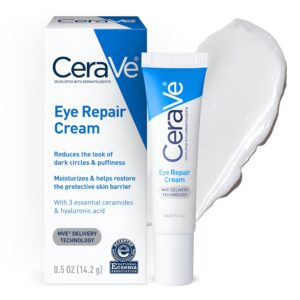
1. CeraVe Eye Repair Cream

If you’re skeptical that a drugstore eye cream can actually work, CeraVe is about to change your mind. This dermatologist-developed formula focuses on what the under-eye area needs most: barrier repair and intensive hydration.
Key Ingredients: Three Essential Ceramides (1, 3, 6-II), Hyaluronic Acid, Niacinamide, Marine and Botanical Extracts
What Makes It Special: CeraVe built its entire reputation on ceramide science—restoring and maintaining the skin’s protective barrier. The under-eye area has virtually no oil glands and a naturally compromised barrier, making it chronically dry and vulnerable. This cream addresses that fundamental issue with three types of ceramides that work together to seal in moisture and strengthen skin structure.
The formula also includes their patented MVE (MultiVesicular Emulsion) technology, which releases ingredients slowly over time. You apply it once, but your skin continues receiving treatment for hours.
Best For: Very dry under-eyes, sensitive skin, barrier repair, anyone starting an eye cream routine, those on a tight budget who want dermatologist-recommended quality.
Texture and Application: Rich, emollient cream texture that feels substantial but absorbs well. A little goes a long way—use a rice grain-sized amount for both eyes. Apply morning and night after cleansing.
Real Results: Users consistently report significant improvement in dryness and texture within 1-2 weeks. For fine lines, expect subtle smoothing around the 4-6 week mark as the barrier repairs and skin retains moisture better. This won’t erase deep wrinkles, but it will make your under-eye area look healthier and feel more comfortable.
What It Won’t Do: This is a hydration and barrier repair specialist. If your main concern is dark circles from pigmentation or significant wrinkles, you’ll need something with more targeted actives like vitamin C or retinol. But for overall eye area health and moisture, you cannot beat this price-to-performance ratio.
The CeraVe Philosophy: Developed with dermatologists, fragrance-free, non-comedogenic, and focused on skin barrier science rather than marketing hype. This is why dermatologists consistently recommend this brand—it works, it’s gentle, and it’s affordable.
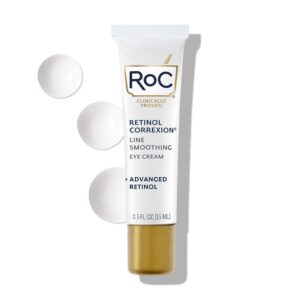
2. RoC Retinol Correxion Eye Cream

If you want retinol for your eye area but can’t justify spending $70+ on prescription-strength formulas, RoC delivers pharmaceutical-grade retinol in a drugstore package.
Key Ingredients: Pure Retinol, Hyaluronic Acid, Essential Minerals, Mineral Complex
What Makes It Special: RoC was one of the first brands to bring over-the-counter retinol to market, and they have decades of research and reformulation experience. Their eye cream contains pure retinol (not retinyl palmitate or other weaker derivatives) at a concentration effective enough to work but gentle enough for daily eye area use.
The formula is clinically proven to reduce the appearance of crow’s feet, dark circles, and puffiness. RoC conducted actual clinical studies—not just consumer perception tests—showing measurable improvement in fine lines and wrinkles.
Best For: Fine lines and crow’s feet, anti-aging prevention (30s-40s), anyone wanting retinol benefits without irritation, those who’ve tried retinol on their face successfully and want to extend it to eyes.
The Retinol Reality: This is gentler than facial retinol but it’s still retinol. Start using it every other night for the first two weeks to build tolerance. Apply to clean, completely dry skin (wait 5 minutes after cleansing if needed). Always use sunscreen during the day when using retinol products.
Texture: Lightweight cream that absorbs quickly without greasiness. Won’t interfere with makeup application in the morning, though most people prefer retinol at night only.
Real Results: This is a long-game product. Retinol works by increasing cell turnover and stimulating collagen production, which takes time. Expect subtle smoothing of fine lines around week 6-8, with more noticeable improvement by week 12. Consistent daily use for 3-6 months shows the best results.
Important Considerations: If you’re using retinol elsewhere on your face, be mindful of total retinol exposure. Some people experience temporary dryness or mild flaking during the adjustment period—this is normal. Back off frequency if irritation occurs, and always pair with a good moisturizer.
Why It’s Worth It: Retinol is the most clinically-proven anti-aging ingredient we have. Getting it in an eye-specific formulation at this price point is remarkable value. This is essentially prescription-strength technology (just slightly lower concentration).
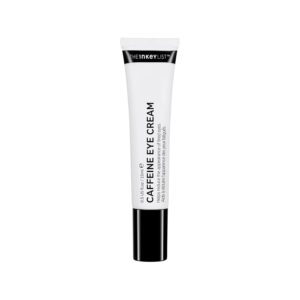
3. The INKEY List Caffeine Eye Cream

If morning puffiness is ruining your life and you’re tired of looking exhausted even after eight hours of sleep, this affordable gem is your solution.
Key Ingredients: Caffeine, Matrixyl 3000 Peptides (Palmitoyl Tripeptide-1 and Palmitoyl Tetrapeptide-7), Albizia Julibrissin Bark Extract
What Makes It Special: Most budget eye creams ask you to choose between addressing puffiness OR fine lines. The INKEY List gives you both by combining caffeine (the depuffing specialist) with Matrixyl 3000 peptides (clinically-studied collagen boosters).
The caffeine constricts blood vessels and drains excess fluid, immediately reducing puffiness and bags. The peptides work over time to build firmer, more resilient skin structure. And the Albizia Julibrissin bark extract (often called the “happiness herb”) helps reduce the appearance of dark circles and improve overall eye radiance.
Best For: Morning puffiness and bags, mild dark circles, fine lines, anyone who wants peptide benefits at a budget price, people who can’t tolerate retinol but still want anti-aging actives.
Why This Beats Similar Products: Many caffeine eye products are just caffeine and filler ingredients. This one includes actual peptides that have clinical studies behind them—the same Matrixyl used in $100+ serums. You’re getting comprehensive treatment, not just temporary depuffing.
Texture and Application: Gel-cream hybrid that feels cooling on application (perfect for puffy morning eyes). Absorbs within seconds, leaving zero residue. Ideal for layering under concealer. Use morning and/or night.
The Morning Routine Power Move: Keep this in your refrigerator for an extra cooling, depuffing effect. Apply first thing after washing your face for maximum anti-puffiness benefits.
Real Results: The caffeine effects are immediate—you’ll see reduced puffiness within minutes of application, especially with the chilled product trick. The peptide benefits are cumulative, showing improvement in firmness and fine lines around week 8-10 with consistent use.
What Users Love: The price-to-performance ratio is unbeatable. This costs less than a fancy coffee but delivers results comparable to products costing 5-10 times more. The lightweight texture makes it ideal for year-round use, and it plays well with all other skincare and makeup.
The INKEY List Philosophy: This brand’s entire mission is making effective active ingredients accessible and understandable. No marketing fluff, no inflated prices, just science-backed formulations at honest price points.
MID-RANGE: Where Science Meets Value
4. Olay Regenerist Retinol24 Eye Cream

Don’t let the drugstore brand fool you—Olay’s research and development budget rivals luxury brands, and their Regenerist line proves it. This is the upgraded, sophisticated cousin of the budget retinol options.
Key Ingredients: Retinol Complex, Niacinamide (Vitamin B3), Peptide Complex, Vitamin E
What Makes It Special: Olay’s proprietary Retinol24 formula is designed to work with your skin’s natural nighttime renewal process, penetrating deep into skin’s surface layers. The “24” refers to 24-hour hydration, but the retinol itself is working hardest while you sleep.
What sets this apart from other retinol eye creams is the addition of niacinamide at a significant concentration. Niacinamide strengthens the skin barrier, reduces inflammation, and brightens—which means you get retinol’s anti-aging power with built-in protection against its potential irritation. It’s a smarter formulation than just retinol alone.
Best For: Anyone serious about wrinkles and firmness, people who found basic retinol eye creams too drying, those wanting multiple actives in one product, preventing and treating moderate signs of aging (40s-50s).
The Formula Difference: Olay has invested heavily in studying how ingredients penetrate skin and which molecular weights work best. Their Retinol24 line is formulated for optimal penetration and minimal irritation—you’re getting sophisticated cosmetic chemistry at an accessible price.
Texture: Rich but not heavy, absorbs well within 1-2 minutes. Substantial enough for nighttime use but won’t make your eyes greasy. Fragrance-free, which is crucial for the sensitive eye area.
How to Use: Apply at night only (retinol degrades in sunlight). Use a rice grain amount for both eyes, gently pat around orbital bone. Can be used nightly once your skin is adjusted. Always follow with sunscreen the next morning.
Real Results: Clinical tests show visible improvement in fine lines, crow’s feet, and under-eye smoothness within 28 days. However, most users report the best results after 8-12 weeks of consistent nightly use. The niacinamide provides almost immediate improvement in under-eye brightness and texture.
Why Dermatologists Respect It: Olay doesn’t rely on marketing hype—they conduct actual clinical studies and publish data. The Regenerist line has peer-reviewed research supporting its efficacy. You’re getting science-backed results at a fraction of the cost of medical-grade brands.
The Trust Factor: Olay has been around for decades and has never jumped on trendy ingredient bandwagons. They let results speak for themselves, which is refreshing in an industry full of empty promises.
5. Neutrogena Rapid Wrinkle Repair Eye Cream

If you’ve been researching retinol eye creams, you’ve probably seen mixed reviews about how long results take. Neutrogena’s “Rapid” claim isn’t just marketing—their Retinol SA technology is designed to work faster than traditional retinol formulations.
Key Ingredients: Accelerated Retinol SA (stabilized retinol), Hyaluronic Acid, Glucose Complex, Dimethicone
What Makes It Special: The “SA” stands for “sustained action”—Neutrogena’s proprietary technology that combines retinol with glucose for enhanced stability and faster visible results. Traditional retinol can take 12+ weeks to show improvement; this formula is designed to show results within 4-6 weeks.
The formula also addresses one of retinol’s biggest drawbacks: irritation. The glucose complex and hyaluronic acid provide a cushion of hydration that minimizes the dryness and flaking that can occur with retinol use. You’re getting accelerated results with reduced side effects.
Best For: Impatient people who want faster results, moderate to significant crow’s feet and wrinkles, anyone who’s tried retinol but gave up because it took too long, those preparing for an event or special occasion.
The “Rapid” Reality: You will see faster improvement than standard retinol products, but “rapid” is still relative. Expect subtle smoothing around week 3-4, noticeable improvement by week 6-8, and significant results after 12 weeks. That’s approximately twice as fast as regular retinol.
Texture and Absorption: Silky, lightweight cream that absorbs quickly. The dimethicone gives it a smooth, almost primer-like finish that works beautifully under makeup or sunscreen. Non-greasy despite being hydrating.
How to Use: Can be used morning and/or night, though most dermatologists recommend night only for retinol products. Start every other night for the first two weeks to build tolerance, then increase to nightly if your skin tolerates it well.
Clinical Results: Neutrogena conducted clinical studies showing improvement in crow’s feet in just one week, with continued improvement over 12 weeks. While “one week” is likely subtle, the fact that any measurable change happens that quickly speaks to the formula’s effectiveness.
What Users Report: The most common feedback is surprise at how quickly they noticed smoother texture and slightly reduced fine lines. Many users who’d given up on retinol eye creams as “too slow” found this one delivered results fast enough to stay motivated.
The Hydration Factor: The high hyaluronic acid content means this cream immediately plumps fine lines while the retinol works on long-term correction. You get instant gratification (hydration) plus long-term benefits (wrinkle reduction).
6. Paula’s Choice Resist Anti-Aging Eye Cream

Paula’s Choice built its reputation on no-nonsense, research-backed formulations without fragrance, irritants, or marketing fluff. Their eye cream lives up to that standard with a comprehensive blend of proven actives.
Key Ingredients: Peptide Complex (multiple peptides including Matrixyl), Antioxidants (Vitamin C Ester, Vitamin E), Ceramides, Niacinamide, Adenosine
What Makes It Special: This isn’t a single-ingredient product betting everything on one active. Paula’s Choice combines multiple peptide types, antioxidants, barrier-repair ingredients, and brighteners in one sophisticated formula. It’s designed to address every major eye area concern simultaneously—fine lines, dark circles, puffiness, and overall skin quality.
The peptide complex includes both signal peptides (that tell skin to make collagen) and neuropeptides (that relax expression lines). The vitamin C ester brightens without irritation. The ceramides repair the barrier. The niacinamide strengthens and brightens. It’s a complete eye treatment.
Best For: People with multiple eye concerns, sensitive or reactive skin (this is extremely gentle), anyone wanting a comprehensive treatment without having to layer multiple products, those who prefer fragrance-free formulations.
The Peptide Power: For an in-depth understanding of how the peptides in this cream work throughout your entire anti-aging routine, check out our complete guide to peptides for skin firming.
Why No Retinol?: Paula’s Choice deliberately excluded retinol from this formula because many people already use retinol in their face routine and don’t need additional exposure. The peptides provide anti-aging benefits without potential retinol sensitivity, making this ideal for layering with other treatments.
Texture: Lightweight cream-gel hybrid that feels luxurious but absorbs quickly. Works beautifully under makeup or sunscreen. Despite being hydrating, it won’t cause milia (those tiny white bumps that can form from heavy eye products).
How to Use: Apply morning and night after cleansing and before moisturizer. Plays well with all other skincare products. If you use retinol on your face at night, apply retinol first, wait 10 minutes, then apply this eye cream.
Real Results: Because this targets multiple concerns with multiple actives, users report comprehensive improvement rather than dramatic change in one area. After 8-12 weeks, expect smoother texture, slightly reduced fine lines, brighter under-eye area, and overall healthier-looking skin.
The Paula’s Choice Philosophy: Everything is fragrance-free, dye-free, and tested for irritation. If you have sensitive skin or react to most eye creams, this brand is one of the safest bets in skincare. The founder, Paula Begoun, built her career on ingredient transparency and calling out beauty industry BS.
Who Should Skip This: If you have one dramatic concern (like very deep wrinkles or severe dark circles), a more targeted single-ingredient treatment might work faster. This is for people wanting overall improvement rather than aggressive single-issue correction.
7. Peter Thomas Roth Peptide Skinjection Fill + Fix Under-Eye Cream

When you’re ready to step up from drugstore peptides to luxury-grade formulations, Peter Thomas Roth delivers. This cream takes the peptide approach seriously with multiple types working synergistically.
Key Ingredients: Multi-Peptide Complex, Hyaluronic Acid Filling Spheres, Neuropeptide Complex, Optical Diffusers
What Makes It Special: The “Skinjection” name refers to the idea of delivering results similar to injectable treatments but through topical application. While that’s admittedly marketing hyperbole (no topical can truly match injectables), the formula does use sophisticated peptide technology that targets similar concerns.
The blend includes signal peptides that stimulate collagen, neuropeptides that relax expression lines around the eyes, and carrier peptides that deliver essential minerals for skin repair. The hyaluronic acid “filling spheres” are microspheres that plump into fine lines for immediate visible improvement while the peptides work on long-term correction.
Best For: Significant crow’s feet and expression lines, loss of firmness and elasticity, people who want injectable-like results without injections, those who’ve tried basic peptide products and want stronger formulations.
The “Fill + Fix” Approach: The “fill” comes from the hyaluronic spheres providing immediate plumping. The “fix” comes from the peptides working over time to rebuild collagen structure. You get instant gratification plus long-term improvement—a smart formulation strategy that keeps users motivated.
Texture: Rich, luxurious cream that feels high-end. Absorbs well despite being substantial. A small amount goes a long way—this tube will last 2-3 months with daily use.
The Optical Diffuser Effect: This contains light-reflecting particles that immediately blur the appearance of fine lines and make under-eyes look brighter. It’s like a subtle soft-focus filter for your under-eye area. Some people find this effect worth the price alone, especially for daytime use under makeup.
Real Results: The hyaluronic filling spheres work immediately—you’ll see plumper, smoother under-eyes right away. The peptide benefits accumulate over 8-12 weeks with continued improvement through 6 months of use. Users consistently report smoother crow’s feet, firmer under-eye skin, and reduced expression line depth.
Why It’s Worth the Upgrade: If you’ve been using The INKEY List or Good Molecules peptide serums and seeing results, this is the logical next level. You’re getting higher concentrations, more peptide types, and additional technologies like the filling spheres. It’s not necessary for everyone, but if peptides are working for you and you want more dramatic results, this delivers.
The Luxury Factor: Peter Thomas Roth is a trusted name in medical-grade skincare. You’re paying for pharmaceutical-quality peptides and sophisticated delivery systems, not just fancy packaging.
PREMIUM: Investment Pieces for Serious Results
8. ALASTIN Restorative Eye Complex

This is the eye cream dermatologists reach for when they want serious results. ALASTIN was developed by a physician specifically to support skin healing and rebuilding, and their eye complex applies that same science to the delicate under-eye area.
Key Ingredients: TriHex Technology (proprietary peptide blend), Optical Diffusing Complex, Peptides, Antioxidants, Japanese Beautyberry Extract
What Makes It Special: ALASTIN’s TriHex Technology does something unique that most eye creams don’t: it helps your skin clear away old, damaged collagen and elastin that’s cluttering up your dermal matrix and preventing new proteins from forming properly. Think of it as clearing debris so new construction can happen efficiently.
Most eye creams only focus on building new collagen. This formula removes the damaged proteins first, then signals production of new, healthy collagen and elastin. It’s a two-phase approach that delivers more dramatic improvement than single-action products.
Best For: Mature eyes with significant aging signs (50+), people with sun damage, anyone preparing for or recovering from aesthetic procedures (this was originally developed for post-laser healing), those wanting the most sophisticated peptide technology available.
The Medical-Grade Difference: ALASTIN is sold primarily through dermatology and plastic surgery offices. You’re getting pharmaceutical-grade ingredients and technology developed for medical use, not just cosmetic marketing.
Texture and Absorption: Silky, lightweight texture that absorbs almost instantly despite being a treatment cream. The optical diffusing complex provides an immediate soft-focus effect that blurs fine lines and dark circles. Works beautifully under makeup or as a standalone treatment.
How to Use: Apply twice daily to clean skin. Pat gently around the entire orbital bone area. Can be used alone or layered under heavier moisturizers if you have very dry under-eyes.
Real Results: This is where the premium price pays off. Users consistently report visible improvement in under-eye firmness, texture, and overall quality within 4-6 weeks. Fine lines soften noticeably, and the under-eye area takes on a more resilient, youthful appearance. Clinical studies show continued improvement through 12+ weeks of use.
Post-Procedure Power: If you’re getting or have gotten laser treatments, chemical peels, or microneedling, dermatologists often recommend ALASTIN specifically because it accelerates healing and optimizes results. The TriHex Technology supports your skin’s natural repair processes at a cellular level.
Who Should Skip This: If you’re in your 20s or early 30s doing prevention, this is overkill. Save your money until you actually need this level of intervention. But if you’re 45+ with significant under-eye aging, this is worth every penny.
9. Estée Lauder Advanced Night Repair Eye Concentrate Matrix

When you think of iconic, luxury skincare, Estée Lauder’s Advanced Night Repair is probably one of the first products that comes to mind. Their eye concentrate applies decades of research and their signature nighttime repair technology specifically to the under-eye area.
Key Ingredients: ChronoluxCB Technology, Hyaluronic Acid, Peptides, Antioxidants, Bifidus Extract
What Makes It Special: Estée Lauder’s research shows that skin has its own circadian rhythm—it repairs itself most actively during nighttime hours. The ChronoluxCB Technology is designed to work with and optimize this natural repair cycle, maximizing your skin’s own regenerative capabilities while you sleep.
The formula also includes their patented bifidus extract—a probiotic ingredient that strengthens skin’s defenses and speeds repair. Combined with a comprehensive blend of peptides, antioxidants, and hydrators, you’re getting Estée Lauder’s entire anti-aging arsenal concentrated for the eyes.
Best For: People who already love the Advanced Night Repair serum and want to extend it to eyes, those who prefer nighttime-focused treatments, anyone wanting luxury skincare backed by decades of research, preventing and treating moderate to significant aging (40s-60s).
The Serum Connection: If you’re already using vitamin C serums in your routine, this eye concentrate pairs beautifully—use vitamin C in the morning for protection and brightening, then this at night for repair.
Texture: Lightweight gel-serum that feels cooling and refreshing on application. Absorbs within seconds, leaving no residue. Despite being called a “concentrate,” it’s not heavy or greasy—it’s designed to layer under night cream if desired.
The Massage Applicator: The bottle comes with a unique metal applicator that cools and massages the under-eye area as you apply. This isn’t just a gimmick—the cooling helps reduce puffiness, and the massage action stimulates lymphatic drainage and circulation. Many users say the applicator alone is worth buying the product for.
How to Use: Apply at night after cleansing. Use the applicator to gently massage in circular motions from inner to outer corner. You can also refrigerate it for extra cooling, depuffing benefits in the morning.
Real Results: Users report waking up with noticeably brighter, less puffy eyes—the overnight repair is visible. With consistent use over 8-12 weeks, fine lines soften, dark circles lighten, and overall under-eye quality improves. The bifidus extract seems to make under-eyes more resilient and less reactive over time.
The Estée Lauder Legacy: This brand has been conducting skincare research since 1946. You’re benefiting from decades of clinical studies, ingredient innovation, and formulation expertise. They’re not chasing trends—they’re setting standards.
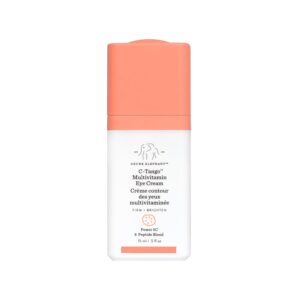
10. Drunk Elephant C-Tango Multivitamin Eye Cream

If you’re part of the clean beauty movement but still want serious anti-aging results, Drunk Elephant delivers both. Their C-Tango eye cream is a masterclass in combining multiple forms of vitamins and peptides for comprehensive under-eye treatment.
Key Ingredients: 8 Peptides, 5 Forms of Vitamin C, Ceramides, Cucumber Extract, Vitamin E
What Makes It Special: Most eye creams include one form of vitamin C. Drunk Elephant includes five different forms, each with slightly different properties and penetration depths. This “multivitamin” approach ensures you’re getting comprehensive vitamin C benefits—brightening, antioxidant protection, and collagen support—at multiple skin layers.
The formula also packs in eight different peptides, covering signal peptides (collagen stimulation), neuropeptides (expression line relaxing), and carrier peptides (mineral delivery). You’re getting premium peptide technology combined with superior brightening power.
Best For: Dark circles from pigmentation, dull under-eyes needing brightening, people who love the multivitamin approach to skincare, clean beauty enthusiasts who won’t compromise on efficacy, those with both dark circles AND fine lines.
The Clean Beauty Credentials: Drunk Elephant formulates without what they call the “Suspicious 6”: essential oils, drying alcohols, silicones, chemical sunscreens, fragrances, and SLS. Every ingredient is chosen for skin compatibility and effectiveness. If you’re sensitive or prefer minimal formulations, this brand’s philosophy aligns with that.
Texture: Rich, buttery cream that feels luxurious and substantial. Despite being thick, it absorbs well and doesn’t cause milia or heaviness. The cucumber extract provides a subtle cooling sensation that feels soothing on tired eyes.
Color and Scent: The cream has a natural peachy-orange tint from the high vitamin C content (not added dyes). It’s completely fragrance-free and has only a very faint natural scent from the ingredients. The tint doesn’t transfer to skin—it’s just how concentrated vitamin C looks.
How to Use: Apply morning and/or night. The vitamin C makes this particularly good for morning use under sunscreen, as it provides additional antioxidant protection. A tiny amount (smaller than a grain of rice) is enough for both eyes—this product is extremely concentrated.
Real Results: The vitamin C brightening effects are noticeable within 2-3 weeks—many users report their under-eyes looking more awake and less shadowy. The peptide benefits accumulate over 8-12 weeks with continued firmness and fine line improvement. The combination of both makes this particularly effective for comprehensive under-eye rejuvenation.
The Drunk Elephant Philosophy: This brand believes in “biocompatible” skincare—formulations that work with your skin rather than forcing change through harsh ingredients. They’re transparent about every ingredient and why it’s included. If you want to understand what you’re putting on your skin, Drunk Elephant makes that easy.
Investment Value: This sits at the entry point of premium pricing. Given how little you need per application, one tube lasts 3-4 months, making it cost-effective despite the upfront price. The multi-ingredient approach also means you don’t need separate vitamin C and peptide products for your eyes.
11. La Mer The Eye Concentrate

Key Ingredients: Miracle Broth (fermented sea kelp), Lime Tea Concentrate, Marine Filling Spheres, Peptides, Antioxidants
What Makes It Special: La Mer’s entire product line is built around their proprietary Miracle Broth—a fermented blend of sea kelp, vitamins, and minerals that took the founder (a NASA aerospace physicist) 12 years and 6,000 experiments to perfect. The eye concentrate contains a concentrated version of this signature ingredient plus lime tea extract specifically for the delicate eye area.
The formula addresses every eye concern simultaneously: Miracle Broth supports skin repair and resilience, lime tea concentrate targets dark circles and puffiness, marine filling spheres provide immediate plumping, and peptides work on long-term collagen building. It’s the most comprehensive eye treatment available.
Best For: People who want the absolute best regardless of price, those with multiple severe eye concerns, anyone who’s tried everything else without satisfaction, luxury skincare enthusiasts, special occasion prep (wedding, reunion, important event).
The Texture Experience: This is where luxury pricing shows itself. The texture is unlike any other eye cream—silky, almost weightless, yet incredibly moisturizing. It melts into skin instantly, leaving under-eyes feeling cushioned and comfortable. Users describe it as “expensive-feeling” the moment they touch it.
The Ritual: La Mer recommends warming the cream between your fingertips for 3-5 seconds before applying to activate the Miracle Broth. Then press gently around the eye area. It’s a small ritual, but it adds to the luxury experience and may actually improve ingredient activation.
Real Results: Users report dramatic improvement in under-eye appearance within 4-6 weeks. Dark circles lighten significantly, fine lines and crow’s feet smooth noticeably, puffiness reduces, and the entire eye area looks more youthful and refreshed. Many describe it as “the only eye cream that actually worked” after years of trying other products.
The Honest Assessment: Does this work? Yes, absolutely. Does it work 10 times better than a $30 eye cream? No. The law of diminishing returns applies here—you’re paying exponentially more for incrementally better results. But those incremental improvements matter to some people, and the experience and ingredient quality are genuinely superior.
Who Should Buy This: If you have to think twice about the price, this isn’t for you. But if you want the best available eye treatment, can afford it without sacrifice, and value the luxury experience as much as the results, La Mer delivers on its promises.
Who Should Skip This: If you’re budget-conscious, still testing what works for your skin, or expecting miracles that no topical product can deliver. There are excellent eye creams at every price point below this that will give you 70-80% of these results for a fraction of the cost.
Eye Cream Showdown: Direct Product Comparisons
You’ve seen the individual products—now let’s put them head-to-head so you can make clear decisions based on your specific needs and budget.
BATTLE 1: Budget Retinol Showdown CeraVe Eye Repair Cream vs. RoC Retinol Correxion
CeraVe: No retinol, focuses on barrier repair and hydration with ceramides and hyaluronic acid. Best for very dry, sensitive under-eyes. Won’t treat wrinkles actively but will improve overall skin health and texture.
RoC: Contains pure retinol for active wrinkle treatment. Best for fine lines and crow’s feet. May cause initial adjustment period. Requires sunscreen commitment.
The Verdict: Choose CeraVe if your under-eyes are chronically dry, sensitive, or you can’t tolerate active ingredients. Choose RoC if wrinkles are your main concern and you want pharmaceutical-strength treatment at a drugstore price. Or use both—CeraVe in the morning for hydration, RoC at night for anti-aging.
BATTLE 2: Peptide Power-Up The INKEY List Caffeine Eye Cream vs. Peter Thomas Roth Peptide Skinjection
INKEY List: Matrixyl 3000 peptides + caffeine. Addresses puffiness AND firming. Ultra-affordable. Great for beginners or those with mild concerns. Lightweight texture.
Peter Thomas Roth: Multi-peptide complex with neuropeptides and filling spheres. More comprehensive anti-aging approach. Optical diffusers for immediate blur effect. Much richer texture. ~$75.
The Verdict: The INKEY List is the smart starting point—see if peptides work for your skin without major investment. If you love the results but want more dramatic improvement, Peter Thomas Roth is the logical upgrade. Both are excellent; it’s a question of how much you want to invest and how severe your concerns are.
BATTLE 3: Mid-Range Multi-Taskers Olay Regenerist Retinol24 vs. Paula’s Choice Resist
Olay: Retinol + niacinamide + peptides. Better for active wrinkle treatment. Drugstore availability. Substantial texture. Best for nighttime use.
Paula’s Choice: Multiple peptides + vitamin C + ceramides + niacinamide. No retinol, so gentler and can be used morning/night. Better for sensitive skin. Comprehensive multi-concern approach.
The Verdict: Choose Olay if wrinkles are your priority concern and you want retinol’s proven anti-aging power. Choose Paula’s Choice if you have sensitive skin, already use retinol elsewhere, or want something you can use twice daily without concerns. Both are excellent value in the mid-range category.
BATTLE 4: Brightening Specialists Neutrogena Rapid Wrinkle Repair vs. Drunk Elephant C-Tango
Neutrogena: Accelerated retinol for fast wrinkle improvement. Some users report brightening as a side benefit. Budget-friendly. May cause initial adjustment.
Drunk Elephant: Five forms of vitamin C specifically for brightening, plus eight peptides. Clean beauty formulation. Rich texture. Better for dark circles from pigmentation.
The Verdict: If wrinkles are your main concern with some brightening needed, Neutrogena delivers both at half the price. If dark circles from pigmentation are your primary issue, Drunk Elephant’s multivitamin approach targets that specifically. The price difference is significant—choose based on your priority concern.
BATTLE 5: Luxury Face-Off ALASTIN Restorative Eye vs. La Mer Eye Concentrate
ALASTIN: TriHex Technology for removing damaged proteins and building new collagen. Medical-grade formulation. Best results for mature, sun-damaged eyes. Dermatologist favorite.
La Mer: Miracle Broth fermented kelp concentrate. Ultimate luxury experience. Addresses all concerns simultaneously. Incredible texture. Cult following.
The Verdict: ALASTIN gives you 85-90% of La Mer’s results at roughly 35% of the cost. It’s the smarter buy for results-focused consumers. La Mer delivers incrementally better outcomes plus an unmatched luxury experience—worth it if budget isn’t a concern and you value that premium feel. Most people should choose ALASTIN unless money truly doesn’t matter.
BATTLE 6: The “Should I Even Bother?” Products Olay Hyaluronic + Peptide 24 Gel vs. Kiehl’s Creamy Eye Treatment
Olay Gel: Hyaluronic acid + peptides in lightweight gel. Good hydration + mild anti-aging. Fragrance-free. Budget-friendly. Actually has actives.
Kiehl’s Avocado: Rich, creamy hydration. Beloved by many. Feels luxurious. But here’s the truth: it’s essentially a fancy moisturizer with avocado oil. No retinol, no significant peptides, no vitamin C. Just hydration.
The Verdict: If you only want hydration and love rich textures, Kiehl’s Avocado is fine—many people swear by it. But you’re paying $35+ for hydration you could get from CeraVe (which also includes ceramides for barrier repair). The Olay Gel gives you hydration PLUS peptides for actual anti-aging at a lower price. Unless you’re specifically in love with Kiehl’s texture, skip it and use that money toward a product with real actives.
The Harsh Truth: Some cult-favorite eye products are just expensive moisturizers with minimal active ingredients. Always check what you’re actually getting beyond hydration.
How to Apply Eye Cream Correctly (You’re Probably Doing It Wrong)
Even the best eye cream won’t work if you’re applying it incorrectly. Here’s how to maximize your product’s effectiveness.
The Perfect Application Technique
Step 1: Start with clean, dry skin. Wash your face and pat completely dry. Wait 2-3 minutes after cleansing before applying eye cream—this is especially important if you’ve just washed with warm water, as skin needs to cool and dry for optimal absorption.
Step 2: Use the right amount. A rice grain-sized amount (or smaller) is enough for both eyes. Eye creams are concentrated—using more doesn’t increase effectiveness, it just wastes product and may cause irritation or milia (those tiny white bumps).
Step 3: Warm between fingertips. Dot the product on your ring finger (the weakest finger, which prevents excessive pressure) and gently pat the two ring fingers together to warm the product. This improves absorption and spreadability.
Step 4: Apply in the right zone. Gently pat (never rub or pull) the cream along the orbital bone—the bony ridge surrounding your eye. Start at the inner corner beneath the eye, move along the lower bone, up and around the outer corner, then across the brow bone if needed. Stay on the bone itself; don’t apply directly on eyelid or right at the lash line.
Step 5: Pat, don’t rub. Use a gentle patting motion to encourage absorption. Rubbing stretches the delicate skin and can cause damage over time. Let your body heat do the work of melting the product into skin.
Step 6: Let it absorb completely (2-3 minutes) before applying additional products or makeup.
Common Mistakes That Sabotage Your Results
Mistake #1: Applying too close to the lash line. This causes product to migrate into your eyes, leading to irritation, puffiness, and that awful blurry vision. Keep it on the orbital bone—your eye naturally does the work of spreading moisture to surrounding areas.
Mistake #2: Using too much product. More is not better with eye creams. Excess product can cause milia, overwhelm the thin skin, and waste expensive product.
Mistake #3: Rubbing or pulling the skin. The eye area is extremely delicate. Tugging, rubbing, or rough application damages collagen and elastin, making wrinkles worse over time. Always use gentle patting motions.
Mistake #4: Applying on wet skin. Water creates a barrier that prevents product absorption. Always apply to completely dry skin for maximum penetration.
Mistake #5: Skipping the upper eye area. Many people only apply eye cream under the eye, but crow’s feet form on the outer corners and sides. Apply around the entire orbital bone for comprehensive treatment.
Mistake #6: Applying makeup or sunscreen too soon. Give your eye cream 2-3 minutes to fully absorb before layering other products. Rushing this step dilutes effectiveness.
Timing and Layering
Morning routine order:
- Cleanser
- Toner (if using)
- Vitamin C serum (if using)
- Eye cream
- Face moisturizer
- Sunscreen (always!)
Evening routine order:
- Double cleanse
- Exfoliating acid (1-2x per week)
- Wait 10-15 minutes
- Retinol (if using, applied on face first)
- Wait 10 minutes
- Eye cream
- Face moisturizer or night cream
Pro tip: If you’re using retinol on your face and a retinol eye cream, apply the face retinol first, wait 10 minutes, then apply the eye cream. This prevents retinol overload.
Special Techniques for Extra Benefits
The refrigerator trick: Keep your eye cream in the refrigerator, especially if you struggle with morning puffiness. The cold temperature constricts blood vessels and reduces swelling. This works particularly well with caffeine-containing products like The INKEY List formula.
Gentle massage: After applying eye cream, use your ring fingers to gently massage in circular motions from inner to outer corner. This stimulates lymphatic drainage and can help reduce puffiness. Don’t press hard—use feather-light pressure.
The tap technique: After massage, gently tap around the entire eye area with your ring fingers for 30 seconds. This stimulates circulation and encourages absorption.
Complementary Tools (Optional)
Gua sha or jade roller: After applying eye cream, use a chilled gua sha stone or jade roller to massage the under-eye area. Move from inner to outer corner, following the natural lymphatic drainage pattern. This can enhance depuffing and product absorption.
Ice globes: These provide cooling and massage simultaneously. Keep them in the freezer and use them over your eye cream for extra depuffing benefits.
Note: Tools are optional extras, not necessities. A well-formulated eye cream applied correctly with your fingers is perfectly effective.
Do Eye Creams Really Work? Setting Realistic Expectations
Let’s have an honest conversation about what eye creams can and cannot do. There’s a lot of hype and misinformation in the skincare industry, and the eye area is particularly prone to exaggerated claims.
What Eye Creams CAN Do (With Consistent Use Over Time)
Reduce the appearance of fine lines and wrinkles: Eye creams with retinol, peptides, and hydrating ingredients can soften fine lines and make crow’s feet less pronounced. Expect 20-40% improvement over 3-6 months, not complete erasure.
Improve under-eye firmness and elasticity: Peptide-based formulas stimulate collagen production, leading to firmer, more resilient skin. This is a gradual process taking 8-12+ weeks.
Brighten mild to moderate dark circles: Vitamin C, niacinamide, and caffeine can lighten hyperpigmentation and reduce vascular dark circles. Improvement is typically 25-50% over 2-3 months.
Significantly reduce morning puffiness: Caffeine-containing eye creams can dramatically reduce fluid retention and puffiness, often showing results within minutes of application.
Improve overall under-eye skin quality: Better texture, hydration, and resilience are achievable with the right products used consistently.
Prevent premature aging: Starting eye cream in your 30s can slow the development of wrinkles and maintain skin quality longer.
What Eye Creams CANNOT Do (No Matter How Expensive)
Erase deep, etched wrinkles: Topical products work on the skin’s surface and upper layers. Deep wrinkles require professional treatments like Botox, fillers, or laser resurfacing. Eye creams can improve them but won’t eliminate them.
Remove severe dark circles caused by genetics or structure: If your dark circles are from thin skin showing veins, hollowing creating shadows, or genetic hyperpigmentation, topical products have limits. Undereye filler or makeup are better solutions.
Lift sagging skin or eliminate bags: True sagging requires surgical intervention (blepharoplasty). Eye creams can improve firmness but cannot lift skin that has already descended.
Work overnight or in one week: Marketing claims about “instant” or “overnight” results refer to temporary hydration and plumping, not actual structural improvement. Real anti-aging results take 8-12 weeks minimum.
Replace injectable treatments: No topical product—no matter how expensive—can match the dramatic results of Botox for wrinkles or filler for volume loss. Neurotransmitter peptides can slightly reduce expression lines but aren’t comparable to paralytic injections.
Fix problems caused by lifestyle: If you’re not sleeping, drinking excess alcohol, smoking, eating high-sodium diets, or skipping sunscreen, no eye cream will overcome those issues. Skincare supports healthy habits; it can’t compensate for destructive ones.
The Timeline for Real Results
Week 1-2: Improved hydration, slight texture improvement, immediate puffiness reduction (if using caffeine). This is from moisturizing and immediate-acting ingredients, not structural change.
Week 4-6: Subtle softening of very fine lines, slightly brighter under-eyes, beginning of skin quality improvement. The active ingredients are starting to work at a cellular level.
Week 8-12: Noticeable improvement in fine lines, better skin firmness, visible reduction in dark circles (if caused by fixable issues), overall healthier-looking under-eye area. This is when people typically become believers.
Month 6+: Significant, sustained improvement. Firmer skin, reduced wrinkle depth, better texture, maintained results with continued use. This is the real payoff period.
Who Gets the Best Results?
Early intervention: People who start using targeted eye creams in their 30s-40s see better preventive results than those who wait until their 60s with severe damage.
Consistent users: Daily application for months (not sporadic use) delivers cumulative benefits.
Sunscreen adherents: Protecting the eye area from UV damage maximizes and maintains eye cream results.
Realistic expectations: Those who understand eye creams improve but don’t miracle-cure are more satisfied with outcomes.
Appropriate product selection: Using the right actives for your specific concerns (retinol for wrinkles, caffeine for puffiness, vitamin C for dark circles) yields better results.
The Honest Bottom Line
Eye creams work, but they’re not magic. Think of them as gym memberships for your eyes—you have to show up consistently, do the work, and be patient for results. They’re a long-term investment in maintaining and improving under-eye quality, not a quick fix for severe aging.
If you have realistic expectations, choose products with proven ingredients, apply them correctly, and give them time to work, you will see improvement. Just don’t expect a cream to deliver the same results as a $2,000 filler injection or surgical intervention.
Supporting Your Eyes from the Inside Out
While topical eye creams work on the surface, supporting skin health from within creates comprehensive improvement. Your under-eye skin reflects your overall health, nutrition, and lifestyle choices.
Internal Support: Building Blocks for Collagen
Remember how we talked about peptides being chains of amino acids, and your body uses amino acids to build collagen? You can support that process from the inside by providing the raw materials your skin needs.
youtric® beauty365

Instead of animal-derived collagen that your body breaks down into amino acids anyway, youtric® beauty365 provides a complete blend of vegan amino acids (the actual building blocks) along with essential nutrients your body needs to synthesize collagen: vitamin C, zinc, copper, and biotin.
When you apply peptide eye cream topically, it signals your skin cells to produce more collagen. When you take youtric® internally, you’re providing the actual materials your body needs to answer that signal. It’s a comprehensive inside-outside approach.
Mix one scoop with water daily. Users report improvements not just in facial skin but in overall skin firmness, nail strength, hair health, and even joint comfort—collagen supports your entire body, not just your face. Most people start seeing improvements around week 4-6, with significant results by week 8-12.
For more on how collagen production works throughout your body, check our Complete Anti-Aging Skincare Routine guide.
Holistic DIY Support: Ancient Wisdom for Modern Eyes
Not everyone wants to rely solely on commercial products. If you’re interested in natural, holistic approaches to support your eye area health, there’s an incredible resource that complements your eye cream routine perfectly.
Radiant Ageless Beauty Secrets: Holistic Alternatives to Botox

This 300+ page full-color guide includes ancient beauty rituals, Ayurvedic remedies, and DIY recipes specifically for the delicate eye area. The author is 46 but regularly gets mistaken for her teenage children’s older sister—living proof that holistic approaches work.
Eye-Specific Sections Include:
- DIY under-eye masks using kitchen ingredients
- Lymphatic drainage massage techniques for puffiness
- Collagen-boosting foods and teas
- Natural dark circle remedies from multiple cultures
- Facial yoga exercises for eye area firmness
- Sleep and lifestyle practices that improve under-eye appearance
You can use this book’s recipes alongside your eye cream, or go fully natural with DIY treatments. Many women love combining both approaches—proven eye cream technology topically with natural, holistic support from within and through lifestyle practices.
Limited Time Bonuses: Right now you also get three bonus ebooks including recipes for collagen-boosting drinks and anti-inflammatory meals that support skin health.
Lifestyle Factors That Maximize Eye Cream Results
Sleep quality: Under-eye bags and dark circles are directly linked to sleep quality. Aim for 7-9 hours of quality sleep with your head slightly elevated to prevent fluid accumulation.
Hydration: Dehydration makes dark circles and fine lines more pronounced. Aim for half your body weight in ounces of water daily.
Sodium intake: Excess sodium causes fluid retention and puffiness. Reduce processed foods and add potassium-rich foods (bananas, avocados) to balance.
Sun protection: UV damage is the primary cause of premature under-eye aging. Wear sunglasses (with UV protection) and sunscreen daily, even in winter.
Manage allergies: Chronic allergies cause inflammation, rubbing, and dark circles. Address the root cause through medication or lifestyle changes.
Reduce alcohol: Alcohol dehydrates skin and dilates blood vessels, worsening both dark circles and puffiness.
Anti-inflammatory diet: Foods rich in antioxidants, omega-3s, and vitamins support skin health from within. Think berries, fatty fish, leafy greens, nuts.
When Eye Cream Isn’t Enough: Other Solutions
Sometimes, despite using excellent eye creams consistently, you need additional solutions for specific concerns. Here’s an honest overview of your options.
For Deep Wrinkles and Crow’s Feet
Botox: Temporarily paralyzes the muscles that create expression lines. Results last 3-4 months. Cost: $200-600 per treatment area. This is the gold standard for dynamic wrinkles (from movement). Eye creams with neurotransmitter peptides can complement Botox, potentially extending time between treatments.
Prescription Retinoids: Tretinoin (Retin-A) or other prescription retinoids are stronger than over-the-counter retinol. Requires dermatologist prescription and careful use, but delivers more dramatic wrinkle improvement. Cost: $50-200+ depending on insurance.
For Volume Loss and Deep Hollows
Under-Eye Filler: Hyaluronic acid filler strategically placed under the eye adds volume, reduces the appearance of dark circles from shadowing, and can smooth the under-eye area. Results last 9-18 months. Cost: $600-1200+ per session. No eye cream can replace lost volume—this is where fillers excel.
Fat Grafting: For severe volume loss, your own fat can be transferred to the under-eye area. More permanent than filler but requires surgery. Cost: $2000-5000+.
For Severe Bags and Sagging
Blepharoplasty (Eyelid Surgery): Removes excess skin and fat from upper and/or lower eyelids. Permanent results. Requires surgery, anesthesia, and 1-2 weeks recovery. Cost: $3000-7000+. This is the only solution for true sagging that eye creams cannot address.
For Stubborn Dark Circles
Color-Correcting Concealer: Sometimes makeup is the answer. Peach/orange-toned concealers neutralize blue/purple dark circles. Yellow-toned concealers neutralize purple/red. This is instant and costs $10-40.
Chemical Peels: Light peels can improve hyperpigmentation-type dark circles. Multiple sessions needed. Cost: $150-300 per session.
Laser Treatment: Certain lasers can target pigmentation and stimulate collagen. Multiple sessions required. Cost: $500-2000+ per session.
The Realistic Combination Approach
In your 30s: Eye cream with peptides/retinol + sunscreen + healthy lifestyle = prevention and maintenance
In your 40s: Eye cream + targeted treatments as needed (perhaps Botox for crow’s feet) = addressing concerns while maintaining overall eye area health
In your 50s+: Eye cream + professional treatments (filler for volume, Botox for wrinkles, potentially surgery for bags) = comprehensive approach using all available tools
The key insight: Eye creams improve your baseline skin quality. Professional treatments address specific dramatic concerns. Used together, they’re more effective than either alone. Don’t feel like eye cream has “failed” if you need professional treatments—they serve different purposes.
Common Eye Cream Questions Answered
Q: Can I use my regular face moisturizer as eye cream? A: You can, but it’s not ideal. Face moisturizers aren’t formulated for the ultra-thin, sensitive eye area. They may be too heavy (causing milia), too irritating (causing redness or puffiness), or lack the targeted active ingredients the under-eye area needs. If budget is tight, use a gentle face moisturizer temporarily, but invest in proper eye cream when possible.
Q: When should I start using eye cream? A: Late 20s to early 30s for prevention, especially if you have genetic predisposition to under-eye issues, lots of sun exposure, or early fine lines appearing. If you’re already in your 40s+ and haven’t started, it’s never too late—you’ll see improvement at any age with consistent use.
Q: Can eye cream cause milia (those tiny white bumps)? A: Yes, if you’re using too much product or a formula that’s too heavy for your skin. Milia form when dead skin cells get trapped beneath the surface. Use only a tiny amount of eye cream, avoid applying too close to the lash line, and ensure proper exfoliation (1-2x per week with gentle acid toner on face, being careful near eyes).
Q: Why do some eye creams make my eyes puffy? A: This usually happens if you’re applying too much product, applying too close to your eyes (product migrates overnight into the eye area causing irritation), or using a formula that’s too heavy for you. Try using less product, applying only on the orbital bone, or switching to a lighter formula.
Q: Can I use retinol eye cream if I’m pregnant or breastfeeding? A: Most doctors recommend avoiding retinol during pregnancy and breastfeeding. Switch to peptide-based eye creams during this time—they’re safe and still provide anti-aging benefits. Always consult your doctor about specific products.
Q: How long does one eye cream typically last? A: With proper use (rice grain-sized amount for both eyes, once or twice daily), a 0.5 oz eye cream typically lasts 2-3 months. If yours is running out faster, you’re probably using too much.
Q: Can men use these eye creams? A: Absolutely. Skin biology doesn’t differ by gender. Men often have thicker skin overall but the eye area is still delicate and ages similarly. These recommendations work equally well for men.
Q: My eye cream stings or burns. Is that normal? A: No. Eye cream should never sting, burn, or cause discomfort. This indicates either: you’re applying too close to your eyes, you’re sensitive to an ingredient, or the formula is too strong. Stop using it and switch to a gentler option. CeraVe or Paula’s Choice are good sensitive-skin alternatives.
Q: Should I use different eye creams for morning and night? A: Not necessary, but some people prefer it. You might use a lighter, caffeine-based cream in the morning for depuffing and a richer, retinol-based cream at night for anti-aging. Or just use the same product twice daily—both approaches work.
Q: Can eye cream get rid of my genetic dark circles? A: If your dark circles are from genetics (thin skin showing veins, bone structure creating shadows, or inherited hyperpigmentation), eye cream can improve them but likely won’t eliminate them completely. You’ll see 25-50% improvement at best. Concealer and, in severe cases, under-eye filler are more effective solutions for genetic dark circles.
Q: Do I need separate eye cream for day and night, or upper and lower eye? A: No. These are marketing tactics. One good eye cream applied around the entire eye area (orbital bone) morning and/or night is sufficient. Don’t buy into unnecessary product multiplication.
The Bottom Line: Which Eye Cream Should You Choose?
After analyzing all these options, let’s make this simple based on your specific situation.
Choose CeraVe Eye Repair Cream if: You’re just starting with eye cream, have very dry or sensitive skin, want dermatologist-recommended basics, or are on a tight budget. It won’t give you dramatic anti-aging results but will improve overall eye area health.
Choose RoC Retinol Correxion if: Fine lines and crow’s feet are your main concern, you want pharmaceutical-grade retinol at drugstore prices, and you’re committed to daily sunscreen use.
Choose The INKEY List Caffeine Eye Cream if: Morning puffiness ruins your life, you want both depuffing AND anti-aging peptides, or you need maximum value (best results per dollar spent).
Choose Olay Regenerist Retinol24 if: You want a sophisticated retinol formula with multiple supporting actives, prefer trusted brands with clinical backing, and can afford mid-range pricing.
Choose Neutrogena Rapid Wrinkle Repair if: You’re impatient and want faster results, need something effective available at any drugstore, or are preparing for a special event.
Choose Paula’s Choice Resist if: You have sensitive skin, want comprehensive multi-ingredient treatment without retinol, or prefer fragrance-free, research-backed formulations.
Choose Peter Thomas Roth Peptide Skinjection if: You want luxury peptide technology without true luxury pricing, love products with immediate visual effects (optical diffusers), or have tried basic peptides and want stronger formulations.
Choose ALASTIN Restorative Eye Complex if: You’re 50+ with significant aging, have sun-damaged eyes, want the most sophisticated peptide technology available, or are serious about investing in medical-grade skincare.
Choose Estée Lauder Advanced Night Repair Eye Concentrate if: You already love the Advanced Night Repair serum, want nighttime-optimized repair technology, or value luxury brands with decades of research.
Choose Drunk Elephant C-Tango if: Dark circles from pigmentation are your main concern, you love the multivitamin approach to skincare, or you want clean beauty without compromising efficacy.
Choose La Mer Eye Concentrate if: You want the absolute best regardless of cost, have tried everything else without satisfaction, or value luxury experience as much as results.
Skip Kiehl’s Creamy Eye Treatment if: You want actual anti-aging actives, not just fancy hydration. Your money is better spent elsewhere unless you specifically love that texture and don’t care about active ingredients.
The Smart Budget Strategy: Start with The INKEY List or CeraVe to see how your skin responds to eye cream. If you like the results and want more dramatic improvement, upgrade to Paula’s Choice or Olay Regenerist. If money isn’t a concern and you have significant aging, go straight to ALASTIN or Drunk Elephant.
The Mix-and-Match Approach: Use an affordable caffeine cream (INKEY List) in the morning for puffiness, and a stronger retinol or peptide formula (RoC, Olay, or Peter Thomas Roth) at night for anti-aging. This gives you targeted treatment for different concerns at different times.
Quick Reference: Your Eye Cream Product Guide
BUDGET-FRIENDLY
- CeraVe Eye Repair Cream – Best for: Dry, sensitive eyes, barrier repair
- RoC Retinol Correxion Eye Cream – Best for: Wrinkles, budget retinol
- The INKEY List Caffeine Eye Cream – Best for: Puffiness, best value
MID-RANGE
- Olay Regenerist Retinol24 Eye Cream – Best for: Retinol + multiple actives
- Neutrogena Rapid Wrinkle Repair Eye Cream – Best for: Faster results
- Paula’s Choice Resist Anti-Aging Eye Cream – Best for: Sensitive skin, comprehensive formula
- Peter Thomas Roth Peptide Skinjection Fill + Fix – Best for: Premium peptides
PREMIUM
- ALASTIN Restorative Eye Complex – Best for: Mature eyes, medical-grade
- Estée Lauder Advanced Night Repair Eye Concentrate – Best for: Nighttime repair
- Drunk Elephant C-Tango Multivitamin Eye Cream – Best for: Dark circles, brightening
- La Mer The Eye Concentrate – Best for: Ultimate luxury
ALTERNATIVES/COMPARISONS
- Olay Hyaluronic + Peptide 24 Gel Eye Cream – Good budget hydration option
- Kiehl’s Creamy Eye Treatment with Avocado – Cult favorite but just hydration
INTERNAL/HOLISTIC SUPPORT
- youtric® beauty365 – Collagen building blocks from within
- Radiant Ageless Beauty Secrets Book – DIY eye treatments and holistic approaches
Final Thoughts
Your under-eye area tells your skin’s story—late nights, stress, years of laughing and squinting, and the simple passage of time. While we can’t stop aging, we can absolutely improve how our eyes look and feel as we age.
The eye creams in this guide represent the best available options across all price points, backed by clinical research and real user results. Whether you choose a $12 caffeine cream or a $275 luxury formula, the most important factors are consistency, proper application, and realistic expectations.
Start where you are, use what you have, and give your chosen product at least 12 weeks to work. Support your eye cream with sunscreen, adequate sleep, and healthy habits. And remember: the goal isn’t perfection—it’s healthy, vibrant skin that looks and feels its best at every age.
Here’s to eyes that look as alive and engaged as you feel.
Looking for more expert beauty and skincare guides for women over 40? Discover our complete collection of in-depth articles, product reviews, and anti-aging tips at Verified Vault Luxe Blog.
Have you found an eye cream that works for you? What concerns are you trying to address? Share your experiences in the comments below—your insights might help another woman find her perfect match!

No responses yet