There is a moment many women over 40 recognize: the night they apply retinol, wake up with tight, flaking, irritated skin, and quietly wonder whether the tradeoff is actually worth it. Retinol has decades of clinical evidence behind it and a well-earned reputation as the gold standard in anti-aging — but for a significant portion of mature skin, the sensitization, photosensitivity, and adjustment period create a real barrier to consistent use. And consistent use is the only use that delivers results.
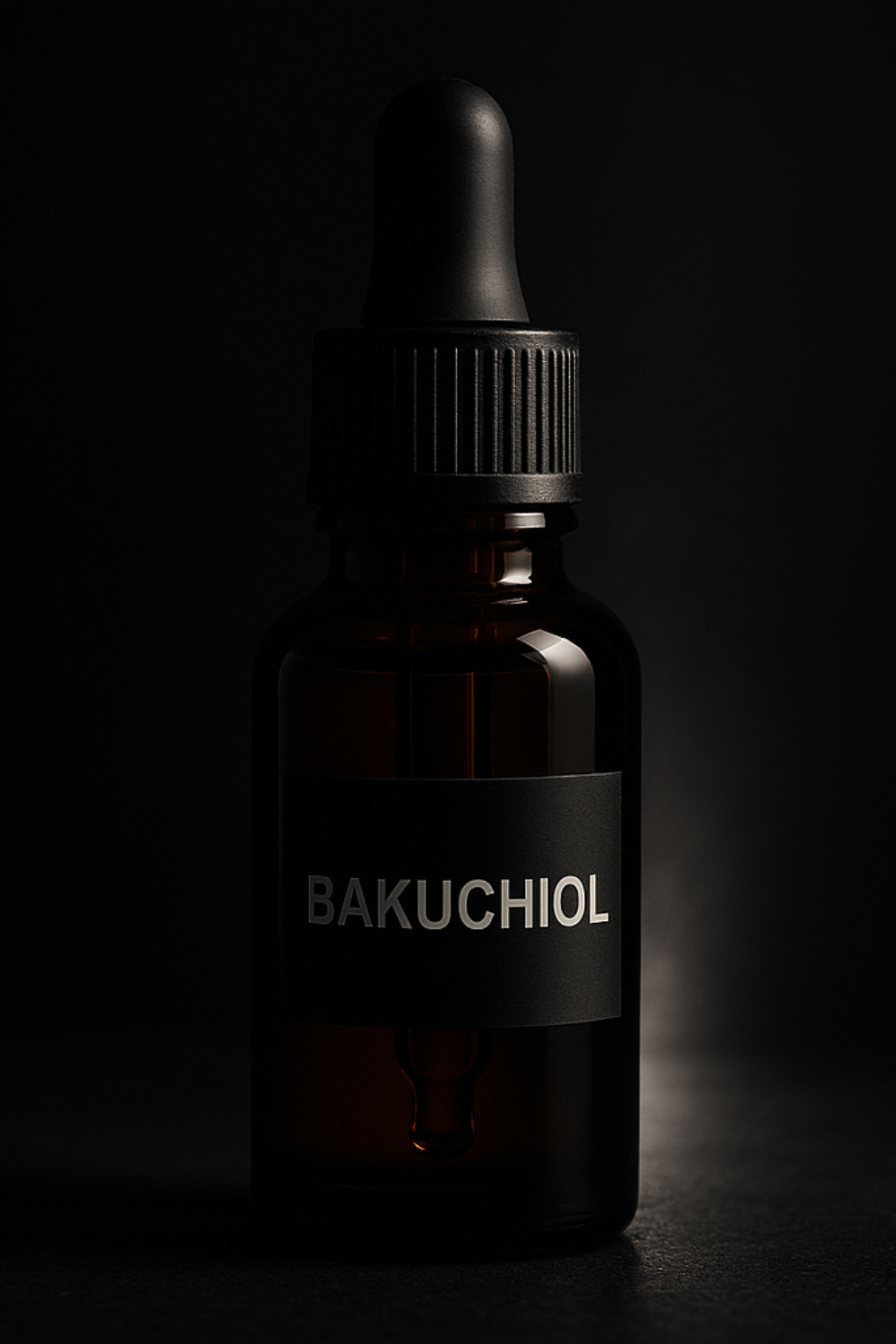
Enter bakuchiol. Over the last several years, this plant-derived active has moved from niche botanical curiosity to peer-reviewed, clinically validated skincare ingredient — and for women over 40 navigating thinning barriers, hormonal sensitivity, and the tolerance shifts that accompany perimenopause and beyond, the timing could not be better. It offers comparable results to retinol, a dramatically gentler side-effect profile, and the rare distinction of being safe for morning and evening use simultaneously.
This is The Vault’s complete reference — what it is, how the science works, how it compares to retinol, and exactly how to use it in a mature skin routine. For product recommendations, see the companion guide Best Bakuchiol Serums for Women Over 40.
Table of Contents
What Is Bakuchiol?
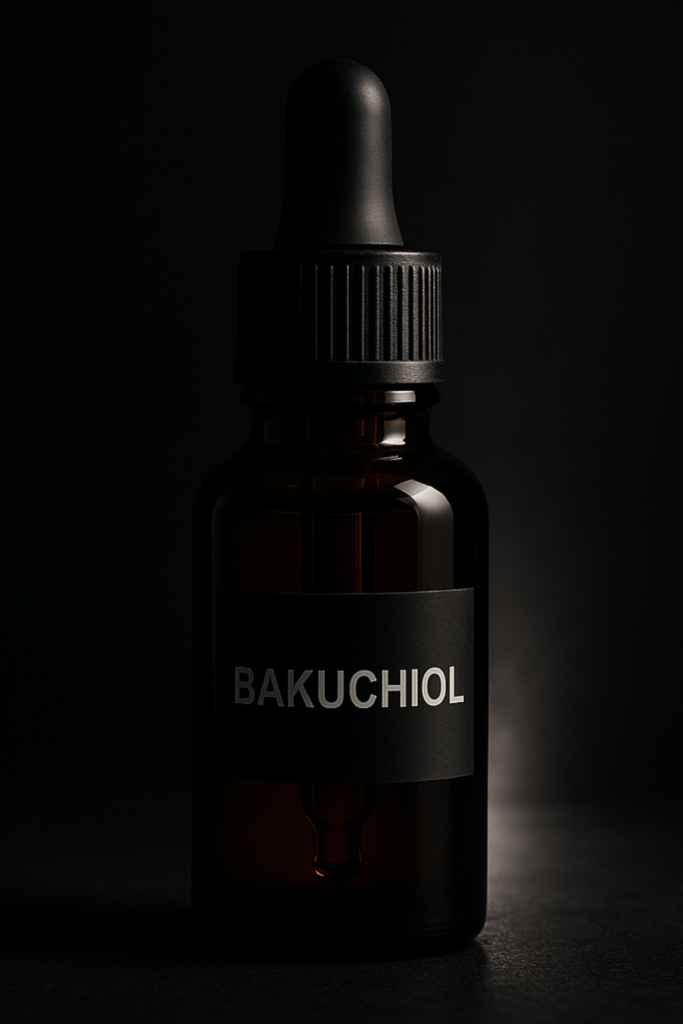
Bakuchiol is a meroterpene — a naturally occurring plant compound — extracted from the seeds and leaves of Psoralea corylifolia, commonly known as the babchi plant. Native to India and widely used in Ayurvedic and traditional Chinese medicine for centuries, the plant has been valued for its anti-inflammatory, antibacterial, and antioxidant properties long before modern dermatology took notice.
Clinical research into its anti-aging mechanisms accelerated significantly after a 2014 landmark paper in the International Journal of Cosmetic Science demonstrated that it activates gene expression pathways strikingly similar to those stimulated by retinol — despite having no structural similarity whatsoever. That finding reframed the ingredient entirely: not just a soothing botanical, but a functional analog to the most clinically proven anti-aging active in cosmetics.
How Bakuchiol Works: The Science for Mature Skin
Understanding why this ingredient earns its retinol-alternative status requires a brief look at what retinol actually does — and why this botanical replicates much of it through entirely different pathways.
The Retinol Mechanism
Retinol works by binding to retinoic acid receptors (RARs) in the skin, triggering a cascade that accelerates cellular turnover, inhibits the enzymes (MMPs) that break down collagen, and stimulates fibroblasts to increase collagen and elastin output. The clinical results over decades are unambiguous: lines soften, texture improves, pigmentation fades, and dermal collagen measurably increases. The challenge is that RAR activation is also responsible for the irritation, dryness, and photosensitivity that accompany use. The same mechanism driving results creates the side effects.
For a full breakdown of retinol forms and strengths for mature skin, see the Vault’s retinol vs. retinoids guide.
The Mechanism: How the Botanical Works
This ingredient’s anti-aging activity is multidirectional. Research shows it stimulates collagen type I and type VII synthesis, increases fibronectin production, activates fibroblast growth factor 7 (FGF7), and inhibits MMP enzymes — achieving the same net collagen-protective and collagen-generating outcome as retinol. Critically, it does this without activating the RAR-β and RAR-γ retinoic acid receptors implicated in retinol’s side-effect profile. This molecular distinction is precisely why the results are comparable while the irritation profile is dramatically lower.
It also demonstrates meaningful antioxidant activity — something retinol does not. In comparative studies, the botanical showed significantly higher antioxidant efficacy than retinol, neutralizing the free radicals that drive oxidative stress and accelerate visible aging in mature skin. For women over 40 already using a dedicated antioxidant serum in the morning, an additional antioxidant contribution at night represents genuine added value. For the full antioxidant framework, see the Vault’s vitamin C serums guide for mature skin.
“As we age, our fibroblasts become senescent — they stop producing as much collagen. Retinoids and bakuchiol help counteract that. When you use topicals like these, you stimulate these cells to become alive again — that means you’re growing new cells, and your skin is supple and tighter.” — Dr. Jordan C. Carqueville, Board Certified Dermatologist, Founder of The Derm Institute of Chicago
The Landmark Clinical Evidence
The most important reference is the 2019 randomized, double-blind, 12-week study published in the British Journal of Dermatology — the most rigorous comparative head-to-head between bakuchiol and retinol conducted on human subjects to date.
Study design: 44 participants applied either 0.5% bakuchiol cream twice daily or 0.5% retinol cream once daily for 12 weeks. High-resolution facial photography was analyzed at weeks 0, 4, 8, and 12. A board-certified dermatologist graded pigmentation and redness at each visit, blinded to treatment group.
Results: Both compounds significantly reduced wrinkle surface area and hyperpigmentation, with no statistically significant difference in wrinkle reduction between groups. Both achieved approximately 20% reduction in wrinkle severity at 12 weeks. For hyperpigmentation improvement at week 12, 59% of the plant compound group showed measurable benefit compared to 44% in the retinol group — a result that favored the gentler option.
The critical difference appeared in tolerability: retinol users reported significantly more skin scaling and stinging. For women over 40, this is not a minor finding. Post-menopausal skin presents with a thinning barrier, reduced sebum production, and decreased resilience — the exact profile that makes retinol’s adjustment period most challenging and most likely to lead to abandonment.
A review in the Journal of Integrative Dermatology subsequently concluded that this plant-based ingredient demonstrates clinically significant similarity to retinol in efficacy, with superiority in tolerability and safety — specifically highlighting its advantage for individuals with sensitive skin who cannot tolerate retinoids.
Bakuchiol vs. Retinol: The Direct Comparison
| Factor | Bakuchiol | Retinol |
|---|---|---|
| Mechanism | Retinol-like gene expression; no RAR activation | RAR activation |
| Clinical evidence | Growing; peer-reviewed 12-week human study | Extensive; decades of data |
| Irritation risk | Low; significantly less scaling and stinging | Moderate to high during adjustment |
| Photosensitivity | None — photostable; safe AM and PM | Photosensitizing; PM use only |
| Pregnancy safety | Generally considered safer; consult physician | Contraindicated |
| Antioxidant activity | Yes — additional anti-aging benefit | None |
| Collagen stimulation | Yes — via FGF7 and collagen type I/VII | Yes — via RAR and MMP inhibition |
| Best for | Sensitive, post-menopausal, barrier-compromised skin | Resilient skin with established tolerance |
| Layering flexibility | Compatible with most actives including vitamin C | Cannot be used simultaneously with vitamin C |
This table is not an argument for replacing retinol. For women over 40 with well-established tolerance and resilient skin, high-quality retinol formulations remain among the most clinically powerful tools available. The case for this gentler plant-based alternative is specifically strongest for women who have tried retinol and experienced intolerable sensitivity, women in perimenopause or menopause whose barrier has thinned significantly, and women who want a retinol-equivalent active safe for morning use without photosensitivity restrictions.
“Bakuchiol offers collagen-boosting benefits without irritation, making it safe for sensitive or acne-prone skin. It smooths, firms and brightens without stickiness, redness or sensitivity.” — Dr. Sonia Badreshia-Bansal, Board Certified Dermatologist, via CNN Underscored
Why Menopausal Skin Benefits Most
The menopausal skin transition creates specific conditions that make this ingredient particularly well-timed. As estrogen levels decline, skin loses approximately 30% of its collagen in the first five years of menopause, cellular turnover slows further, the barrier thins, and products previously well-tolerated can begin to sting, sensitize, or feel too harsh.
This is precisely the window — perimenopause through early post-menopause — when many women abandon their retinol routine entirely, frustrated by intolerable sensitivity at the moment when collagen support is most urgently needed. This plant-based active provides a clinically validated path to maintain cellular renewal and collagen stimulation through this transition without the barrier disruption that sends women back to square one.
“As estrogen levels drop during perimenopause and menopause, we often see that the skin becomes drier, thinner and less resilient. I recommend looking for retinoids, or gentle alternatives like bakuchiol, to boost collagen and smooth fine lines.” — Dr. Corey Hartman, Board Certified Dermatologist, via Yahoo Beauty
For a deeper exploration of how hormonal changes affect the skin at every layer, see the Vault’s guides to best moisturizers for mature skin over 40 and the complete anti-aging skincare routine for women over 40.
One Important Nuance: The Vitamin A Question
Women using pharmaceutical-grade vitamin A systems should understand that these regimens — built around progressive, concentration-controlled delivery — represent a distinct and more sophisticated approach to skin renewal backed by their own clinical data. The comparison is not apples-to-apples with either OTC retinol or bakuchiol.
This gentle botanical is not a replacement for dedicated vitamin A systems for women who can tolerate them. It is best understood as an alternative for those who cannot — or as a transitional bridge while tolerance is being established. The Vault’s guide to peptides for skin firming explores how non-vitamin-A actives can anchor a complete corrective routine.
Practical Protocol for Mature Skin
Concentration: Clinical studies used 0.5%. Most effective formulations fall in the 0.5%–1% range. Below 0.3% is generally considered sub-therapeutic for anti-aging results.
Frequency: Unlike retinol, this ingredient can be used twice daily — morning and evening — without photosensitivity concerns. Morning use adds antioxidant protection alongside vitamin C and SPF; evening use supports overnight cellular repair.
Layering: Compatible with most actives, including vitamin C, niacinamide, AHAs, and peptides. There is no mandatory day-night split as there is with retinol. In serum format, apply after cleansing and before moisturizer. In cream format, use as the final moisturizing step.
Timeline: Surface texture improvement and early brightening typically appear within 4–6 weeks. Measurable wrinkle and tone improvement aligns with the 12-week clinical study mark. This is a cumulative active — consistent use over time produces progressively stronger results.
Pairing for maximum impact: The most effective mature-skin routines pair it with a dedicated antioxidant serum in the morning, a broad-spectrum SPF, and a barrier-supporting moisturizer. See the Vault’s guide to the best face oils for mature skin for compatible nourishing layering options.
Can These Two Actives Be Used Together?
Yes — and emerging evidence suggests the combination may be additive. This botanical has been shown to enhance retinol’s efficacy while mitigating some of its harsher effects, making it a logical pairing for women who want to maintain retinol but reduce tolerability issues. A practical approach: use retinol on designated evenings (2–3 times per week) and the plant-based option on the remaining evenings and every morning. The collagen-stimulating benefits of both actives rotate in without compounding retinol’s irritation burden.
The Photostability Advantage
One of bakuchiol’s most underappreciated distinctions is photostability. Retinol degrades rapidly on exposure to light and air — which is why it must be used at night, stored in opaque packaging, and handled carefully. This botanical ingredient is stable in both air and sunlight. It does not degrade with light exposure and does not increase the skin’s photosensitivity.
This means it actively works alongside a vitamin C serum and SPF in a morning routine rather than being photodegraded before it can deliver benefit. For women managing a complex multi-active routine over 40, this flexibility significantly simplifies layering logic. Standard sun protection is still recommended — not because this ingredient sensitizes, but because SPF is non-negotiable in any anti-aging routine. See the Vault’s guide to the best sunscreens for mature skin over 40.
❓ Frequently Asked Questions: Bakuchiol for Women Over 40
How does it compare to retinol for anti-aging results? The most rigorous published head-to-head study found comparable wrinkle reduction at 12 weeks between 0.5% concentrations of each compound, with the plant-based option showing better pigmentation improvement and significantly fewer side effects. Against prescription-strength retinoids at higher concentrations, retinoids still hold the clinical edge in speed and depth of correction.
Is it suitable for sensitive or rosacea-prone skin? Yes — the clinical literature specifically identifies it as appropriate for sensitive, rosacea-prone, and barrier-compromised skin. Its anti-inflammatory properties may benefit inflammatory skin conditions alongside the anti-aging effect.
Will I experience a purge period like I do with retinol? No. Unlike retinol, this ingredient does not trigger the retinoid purge — the initial acne flare resulting from accelerated surface-cell shedding. It drives collagen stimulation through pathways that do not cause the same rapid turnover response.
Is it safe to use during pregnancy? This plant-based active is generally considered safer than retinoids during pregnancy, as it does not activate the RAR receptors implicated in retinoid teratogenicity. As with any skincare active during pregnancy, consult your physician before use.
How long should I use it before expecting results? Surface softening and early brightening typically appear within 4–6 weeks. Meaningful wrinkle and tone improvement aligns with the 12-week clinical study timeline. Do not assess results before the 12-week mark.
Can I use it alongside my vitamin C serum? Yes. Unlike retinol, it has no documented incompatibility with vitamin C and can be used in the same morning routine without a time-separation protocol.
Will it address deep wrinkles or significant laxity? It is most effective for fine-to-moderate lines and early firmness loss. For significant established laxity or deep structural wrinkles, it works best combined with more targeted actives — peptide serums, professional treatments, or a graduated vitamin A programme.
What concentration should I look for in a product? The 0.5%–1% range is the clinically supported therapeutic window. The landmark study used 0.5%. Formulations below 0.3% are likely sub-therapeutic.
Does it have a noticeable scent? Pure bakuchiol has a faint, slightly earthy botanical scent that most people find neutral or mild. Fragrance-free formulations are widely available and recommended for sensitive skin.
Is it suitable for vegans? Yes. Being plant-derived from the babchi plant, it is inherently vegan — unlike some retinoids sourced from animal products.
📚 Continue Your Skincare Journey
Previously in The Vault: Best SkinCeuticals Products for Women Over 40
Coming Next: Best Bakuchiol Serums for Women Over 40 — The Vault’s curated product edit with VVL-Chosen pick
Comments are closed